“A Thoughful Primer. Many of us will brush away the concept of living a happy and simple life because the idea of finding happiness that way seems too good to be true. And yet, large numbers of people seeking a spiritual component in their lives are willing to look at Buddhism because ‘happy and simple’ sounds wonderful in these turbulent times. In that context, James Williams and Amy White’s third book in their Mindfulness and Minimalism series - Beginning Zen Buddhism is an easy introduction to the subject. Th...”
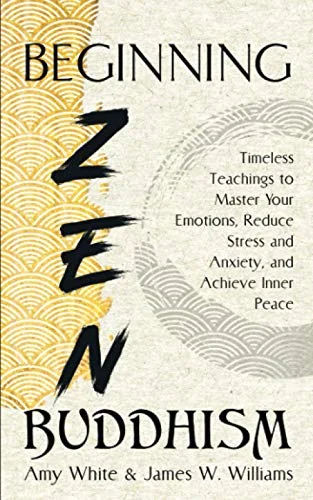
— Book by James W. Williams
Beginning Zen Buddhism: Timeless Teachings to Master Your Emotions, Reduce Stress and Anxiety, and Achieve Inner Peace (Mindfulness and Minimalism)
Beginning Zen Buddhism: Timeless Teachings to Master Your Emotions, Reduce Stress and Anxiety, and Achieve Inner Peace (Mindfulness and Minimalism)
Prices as of May 8, 2026 · subject to change on retailer.
"Zen is not some kind of excitement, but concentration on our usual everyday routine."
WHAT THIS BOOK IS — AND ISN'T
Not a religious text. Not a romanticization. The book is written for someone curious about Buddhist thought who wants the ideas plainly, the meditation work practically, and the historical context honest. Several reviewers noted the tone reads as "secular benefits of meditation by a careful student," not as evangelism — and that's the right read.
WHAT THE BOOK COVERS
WHO IT'S FOR
The reader who's tried mindfulness apps and wants the deeper grounding. Someone who's read about Buddhism in passing and wants a structured introduction without committing to a tradition. The professional who suspects their stress isn't a productivity problem but a way-of-being-in-the-world problem, and is finally looking elsewhere for the answer.
WHAT IT'S NOT
Not a comprehensive scholarly treatment of Zen — readers wanting depth on Dōgen or Suzuki should go to the source texts. Not a substitute for in-person practice with a teacher when serious meditation work begins. The strength is the on-ramp: short, organized, written for the curious beginner who wants the map before the territory.
Zen isn't a destination. It's the willingness to be exactly here, doing exactly this, without needing it to be more interesting than it is.
— James W. Williams
WHAT THIS BOOK IS — AND ISN'T
Not a religious text. Not a romanticization. The book is written for someone curious about Buddhist thought who wants the ideas plainly, the meditation work practically, and the historical context honest. Several reviewers noted the tone reads as "secular benefits of meditation by a careful student," not as evangelism — and that's the right read.
WHAT THE BOOK COVERS
- The Four Noble Truths. The framework readers single out as the most clarifying part — suffering exists, has a cause, has an end, has a path. Plain language, no incense.
- The Eightfold Path. The eight practices Buddha proposed — view, intention, speech, action, livelihood, effort, mindfulness, concentration — with everyday examples for each, not monastic ones.
- Where Zen diverges. The specific Zen contribution: zazen (sitting), the emphasis on direct experience over doctrine, and the koan tradition that uses paradox to interrupt mental habit.
- Meditation, instructed. Not "clear your mind." Specific posture, breath count, what to do when attention drifts (it will, repeatedly). The chapter most readers came back to.
- Application to ordinary life. The harder half: bringing the practice into work, conflict, parenting, traffic. Where the principles meet resistance and where the actual training happens.
WHO IT'S FOR
The reader who's tried mindfulness apps and wants the deeper grounding. Someone who's read about Buddhism in passing and wants a structured introduction without committing to a tradition. The professional who suspects their stress isn't a productivity problem but a way-of-being-in-the-world problem, and is finally looking elsewhere for the answer.
WHAT IT'S NOT
Not a comprehensive scholarly treatment of Zen — readers wanting depth on Dōgen or Suzuki should go to the source texts. Not a substitute for in-person practice with a teacher when serious meditation work begins. The strength is the on-ramp: short, organized, written for the curious beginner who wants the map before the territory.
Zen isn't a destination. It's the willingness to be exactly here, doing exactly this, without needing it to be more interesting than it is.
— James W. Williams
— Readers say
What readers are saying.
“Applying principles of Buddhism to everyday life. I was pleasantly surprised at how much I got out of reading this book. It was very well-written, organized and concise. It was easy to read and understand, yet detailed in a good way. If you want to know the history of Buddhism/Zen Buddhism, it's all in there as well, but what I enjoyed most was the lessons or suggestions on ways to apply the principles to our everyday life. Really good! I'm inspired to make it my choice to experience less struggle, more peace, and learn how to take that peac...”
“Living the life of Zazen nowadays. The book is an introduction and a guide of living the lifestyle advised by Zen Buddhism. After a short overview of the history of Buddhism in general and Zazen specifically, the author starts explaining on how to incorporate that way of life into our modern lifestyle, and lead a happy life. On paper it is easy - probably not so easy to follow up in reality.. It is sometimes difficult to not do things in the name only. Still, the guide is well-written and easy to understand, in the letter e...”
“An introduction to eastern thought. These are the key ideas learned in this book. • All human beings are Buddhas • Each person is invited to live a life of Enlightenment • Suffering exists, and it is an inexorable aspect of life • The Four Noble Truths explains how suffering is relevant in our life: o The Truth of Suffering o The Truth of the Cause of Suffering o The Truth of the End of Suffering o The Truth the Path that leads to the End of Suffering • The Eightfold Path is eight practices created by Buddha that, when...”
“Complete detailed introduction to zen buddhism. This book is a complete detailed introduction to zen buddhism, and how we can apply in practice and more specifically in our day to day life these principles to live a happier and peaceful life, have inner peace and satisfaction, open our minds and be more enlightened. It provides us step by step guides and tips to apply these teachings in home, work, relationships and everywhere else you can think of. It goes through all kind of related concepts and explains clearly the various definitio...”
“Thoughtful and Engaging. This was a wonderful beginners book on Zen Buddhism. The mindfulness lessons and exercises were great. There flow of the book was a little confusing at times however you receive a ton of information on this read.”
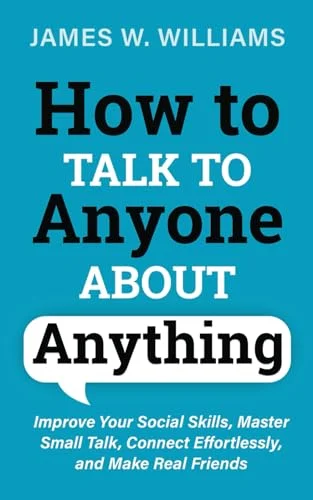
James W. Williams
How to Talk to anyone About Anything: Improve Your Social Skills, Master Small Talk, Connect Effortlessly, and Make Real Friends (Communication Skills Training)
How to Talk to anyone About Anything: Improve Your Social Skills, Master Small Talk, Connect Effortlessly, and Make Real
James W. Williams
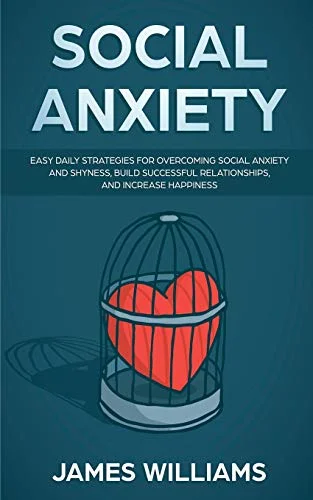
Social Anxiety: Easy Daily Strategies for Overcoming Social Anxiety and Shyness, Build Successful Relationships, and Increase Happiness
Social Anxiety: Easy Daily Strategies for Overcoming Social Anxiety and Shyness, Build Successful Relationships, and Inc

James W. Williams
Dating: Secrets for Introverts - How to Eliminate Dating Fear, Anxiety and Shyness by Instantly Raising Your Charm and Confidence with These Simple Techniques
Dating: Secrets for Introverts - How to Eliminate Dating Fear, Anxiety and Shyness by Instantly Raising Your Charm and C