“Nice read.. Very insightful content you can apply to your daily life. Easy to read. I’m very glad that I bought it.”
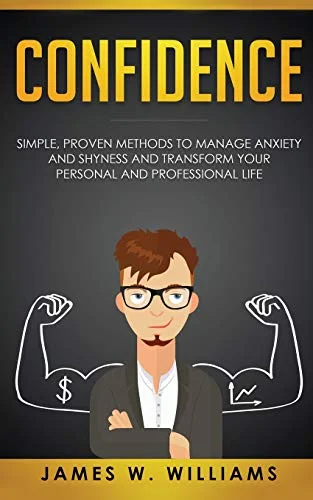
— Book by James W. Williams
Confidence: Simple, Proven Methods to Manage Anxiety and Shyness, and Transform Your Personal and Professional Life
Confidence: Simple, Proven Methods to Manage Anxiety and Shyness, and Transform Your Personal and Professional Life
Prices as of May 8, 2026 · subject to change on retailer.
Confidence isn't a feeling you wait to arrive. It's a residue that builds from showing up, surviving the awkward moment, and noticing it didn't kill you.
WHAT THE BOOK ARGUES
Most confidence books promise mindset shifts. The book's premise is more mechanical: confidence is a behavioral residue. You don't talk yourself into it. You do small, calibrated reps until the body stops bracing. The book is short on purpose — the work is in the reps, not the reading.
WHAT THE BOOK COVERS
WHO IT'S FOR
The reader exhausted by mindset-only confidence books that didn't move the needle. Someone re-entering work, dating, or social life after a hard season and needing the framework before the practice. Anyone who knows their problem isn't intelligence or capability — it's the small daily collapse before they get to use either.
WHAT IT'S NOT
Not a comprehensive treatment of confidence research. Honest reviewers noted the book is short — "just as I was getting into it, it ended" was the exact phrase. Read it as a quick primer, then run the reps. Depth comes from practice, not from longer chapters.
Confidence doesn't arrive. It accumulates — quietly, on Tuesdays, every time you do something that scared you slightly and then went home unharmed.
— James W. Williams
WHAT THE BOOK ARGUES
Most confidence books promise mindset shifts. The book's premise is more mechanical: confidence is a behavioral residue. You don't talk yourself into it. You do small, calibrated reps until the body stops bracing. The book is short on purpose — the work is in the reps, not the reading.
WHAT THE BOOK COVERS
- Anxiety vs. activation. The reframe of physiological arousal — racing pulse, dry mouth, jitters — as fuel rather than warning. Same chemistry as excitement, different label, very different downstream effect.
- Negative self-talk, named. The specific cognitive distortions that pre-emptively dismantle confidence — catastrophizing, all-or-nothing, mind-reading — and the brief restructuring moves that interrupt them.
- Body before mind. Posture, breath, gaze. The somatic moves that change how confident you actually feel, not just how confident you look — most communication books get this backwards.
- Calibrated reps. Why "just put yourself out there" fails — the dose is wrong. Smaller, specific exposures, run reliably, that compound where heroic gestures don't.
- Adversity as evidence. The under-discussed half: confidence built across rough patches outlasts confidence built in good weather. The book's clearest argument for why hard seasons aren't lost time.
WHO IT'S FOR
The reader exhausted by mindset-only confidence books that didn't move the needle. Someone re-entering work, dating, or social life after a hard season and needing the framework before the practice. Anyone who knows their problem isn't intelligence or capability — it's the small daily collapse before they get to use either.
WHAT IT'S NOT
Not a comprehensive treatment of confidence research. Honest reviewers noted the book is short — "just as I was getting into it, it ended" was the exact phrase. Read it as a quick primer, then run the reps. Depth comes from practice, not from longer chapters.
Confidence doesn't arrive. It accumulates — quietly, on Tuesdays, every time you do something that scared you slightly and then went home unharmed.
— James W. Williams
— Readers say
What readers are saying.
“Very short book! Just as I was getting into it, it ended!. Very short book with quick tips. It is an introduction about shyness and some ideas how you can improve your personal and work life environment. This is ideal if you need quick self help book!”
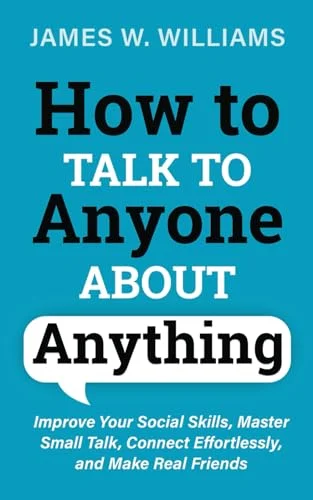
James W. Williams
How to Talk to anyone About Anything: Improve Your Social Skills, Master Small Talk, Connect Effortlessly, and Make Real Friends (Communication Skills Training)
How to Talk to anyone About Anything: Improve Your Social Skills, Master Small Talk, Connect Effortlessly, and Make Real
James W. Williams
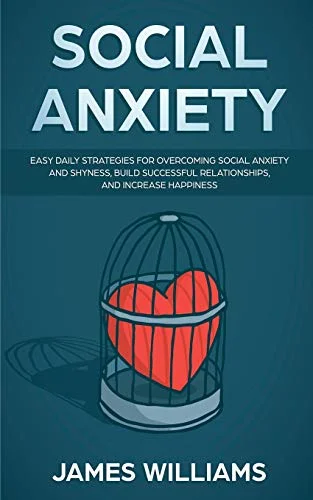
Social Anxiety: Easy Daily Strategies for Overcoming Social Anxiety and Shyness, Build Successful Relationships, and Increase Happiness
Social Anxiety: Easy Daily Strategies for Overcoming Social Anxiety and Shyness, Build Successful Relationships, and Inc

James W. Williams
Dating: Secrets for Introverts - How to Eliminate Dating Fear, Anxiety and Shyness by Instantly Raising Your Charm and Confidence with These Simple Techniques
Dating: Secrets for Introverts - How to Eliminate Dating Fear, Anxiety and Shyness by Instantly Raising Your Charm and C