“Thanks!. This book helps you understand more than just the basics of human behavior. If you or any of your loved ones have suffered emotionally or is currently living through a nightmare that is directly related to the inherent dangers of dark psychology, this is a book you want to read. Dark psychology is not a novel concept so, this book is not about any ground-breaking discoveries. I see kids make friends with people who influence them in terrible ways and despite the solid home training they have,...”
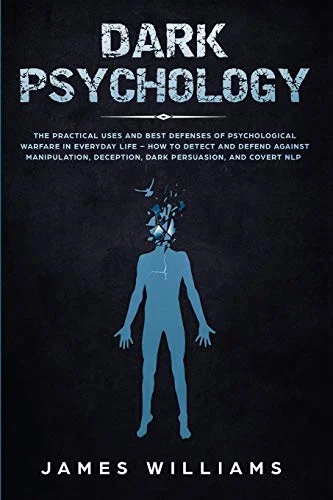
— Book by James W. Williams
Dark Psychology: The Practical Uses and Best Defenses of Psychological Warfare in Everyday Life - How to Detect and Defend Against Manipulation, Deception, Dark Persuasion, and Covert NLP
Dark Psychology: The Practical Uses and Best Defenses of Psychological Warfare in Everyday Life - How to Detect and Defend Against Manipulation, Deception, Dark Persuasion, and Covert NLP
Prices as of May 8, 2026 · subject to change on retailer.
Manipulation rarely announces itself. By the time you can name what's happening, you've already been participating in it.
WHAT THIS BOOK IS — AND ISN'T
This is a defensive primer, not a tactics manual. The book opens with a clear position: dark psychology — coercion, deception, persuasion-without-consent — exists in everyday life, in workplaces and families and online, and most people learn to recognize it only after they've been used by it. The book is for the recognition work, not for replicating it.
WHAT THE BOOK COVERS
WHO IT'S FOR
The reader who suspects someone in their life is operating differently than they say. The parent worried about influence patterns around a teenager. Anyone who's been told they're "too sensitive" by the person making them sensitive, and is gathering vocabulary for what's actually happening.
WHAT IT'S NOT
Not an academic text on dark personality research — Cleckley, Babiak, and Hare go deeper there. Honest reviewers flagged earlier editions for editing and proofing issues, which have been revised since. The book functions as a starter glossary and a defensive frame, not a comprehensive treatment. Treat it as the on-ramp, then go to the deeper sources where the material matters most to you.
The first defense against manipulation is naming it. The second is leaving the room earlier than feels polite. The third is not needing to win the argument about whether it happened.
— James W. Williams
WHAT THIS BOOK IS — AND ISN'T
This is a defensive primer, not a tactics manual. The book opens with a clear position: dark psychology — coercion, deception, persuasion-without-consent — exists in everyday life, in workplaces and families and online, and most people learn to recognize it only after they've been used by it. The book is for the recognition work, not for replicating it.
WHAT THE BOOK COVERS
- The dark triad named. Narcissism, Machiavellianism, psychopathy — short, plain-language descriptions and the patterns each tends to run in close relationships.
- Manipulation tactics, recognizable. Gaslighting, love bombing, intermittent reinforcement, triangulation. The vocabulary that lets you point at a behavior instead of carrying a vague "something's wrong" feeling.
- Defending the people who can't yet defend themselves. Several reviewers came to the book worried about a child or vulnerable family member being influenced. Specific guidance on naming patterns out loud without escalating them.
- The online environment. Scams, social engineering, parasocial influence — where most everyday "dark psychology" actually happens now, far from the dramatic case studies.
- Why awareness matters more than counter-tactics. The book is direct: trying to out-manipulate a manipulator usually makes things worse. The defense is recognition, distance, and naming — not warfare.
WHO IT'S FOR
The reader who suspects someone in their life is operating differently than they say. The parent worried about influence patterns around a teenager. Anyone who's been told they're "too sensitive" by the person making them sensitive, and is gathering vocabulary for what's actually happening.
WHAT IT'S NOT
Not an academic text on dark personality research — Cleckley, Babiak, and Hare go deeper there. Honest reviewers flagged earlier editions for editing and proofing issues, which have been revised since. The book functions as a starter glossary and a defensive frame, not a comprehensive treatment. Treat it as the on-ramp, then go to the deeper sources where the material matters most to you.
The first defense against manipulation is naming it. The second is leaving the room earlier than feels polite. The third is not needing to win the argument about whether it happened.
— James W. Williams
— Readers say
What readers are saying.
“Great book. WORTH EVERY PENNY!!!!”
“Interesting And Informative. Made me reflect on the people in my life and how to identify manipulative traits. I now know what to look for!”
“Disappointing. The idea of this book is certainly an entertaining one, although it was poorly executed in my opinion. The scenarios that are put forth and the personal experience that the author draws from have no supporting details or any indicators that the events actually take place; And this is a very large portion of what the book is. The only thing in this book that offered any kind of insight were the headers of each chapter. So in my opinion I find the book lacking, with a very poor execution. A was...”
“Not educational, solely entertainment.. Spelling and grammatical errors are present all throughout the book. The author’s clear surface level understanding of Psychology made me realize I was mistaken to think of this book as educational and not simply psychobabble. I went in with the wrong expectations, and it ruined the book.”
“Not Good. This book stinks. There are typos and grammatical errors everywhere. It is so basic and uninformative I had to stop reading halfway through.”
James W. Williams
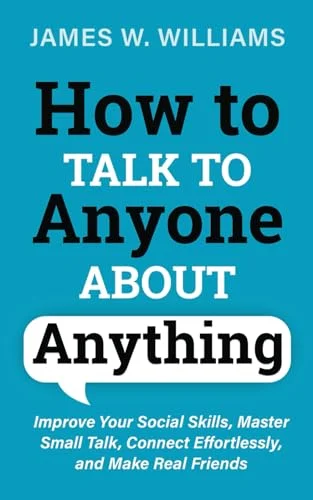
How to Talk to anyone About Anything: Improve Your Social Skills, Master Small Talk, Connect Effortlessly, and Make Real Friends (Communication Skills Training)
How to Talk to anyone About Anything: Improve Your Social Skills, Master Small Talk, Connect Effortlessly, and Make Real
James W. Williams
Social Anxiety: Easy Daily Strategies for Overcoming Social Anxiety and Shyness, Build Successful Relationships, and Increase Happiness
Social Anxiety: Easy Daily Strategies for Overcoming Social Anxiety and Shyness, Build Successful Relationships, and Inc
James W. Williams
Dating: Secrets for Introverts - How to Eliminate Dating Fear, Anxiety and Shyness by Instantly Raising Your Charm and Confidence with These Simple Techniques
Dating: Secrets for Introverts - How to Eliminate Dating Fear, Anxiety and Shyness by Instantly Raising Your Charm and C