“Enjoyable read. This book is easy to understand, interesting, insightful, and made me really think. Are we all really this much alike? LOL. Yes, I want to change the micro-decisions that I make on a daily basis because that is what makes up my days and inevitably my life. The advice that he gives in the book seems very doable. No time like the present to try and make this the best of my life.”
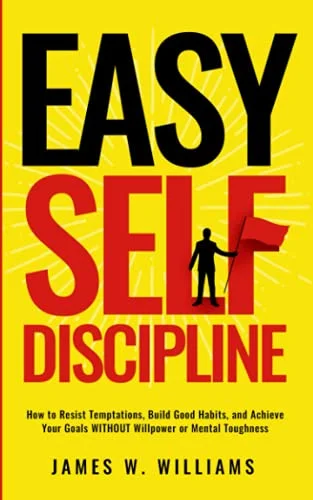
— Book by James W. Williams
Easy Self-Discipline: How to Resist Temptations, Build Good Habits, and Achieve Your Goals WITHOUT Will Power or Mental Toughness (Self-Discipline Mastery)
Easy Self-Discipline: How to Resist Temptations, Build Good Habits, and Achieve Your Goals WITHOUT Will Power or Mental Toughness (Self-Discipline Mastery)
Prices as of May 8, 2026 · subject to change on retailer.
Real discipline doesn't require strenuous effort and willpower. That's the thesis the book opens with — and spends the next chapters defending.
WHY THIS BOOK IS DIFFERENT FROM THE OTHER ONE
Most self-discipline books pitch grit, cold showers, and Navy SEAL mindset. This one argues the opposite: willpower fails predictably, and any strategy built on it will collapse the first hard week. The work is design, not toughness — building an environment and a set of micro-decisions where the disciplined choice is the default, not the heroic one.
WHAT THE BOOK COVERS
WHO IT'S FOR
The reader exhausted by willpower-based advice that didn't work the last five times. Anyone whose self-discipline collapses around 4pm or week three. The person who suspects their problem isn't motivation — it's that they've been fighting their environment instead of designing it.
WHAT IT'S NOT
Not a comprehensive habit-science textbook (Atomic Habits and The Power of Habit cover that ground in more depth). Not a productivity manual. The strength is the reframe and the on-ramp: short, contrarian, written for someone who needs permission to stop trying to overpower themselves and start outsmarting themselves instead.
You don't out-discipline a bad environment. You redesign the environment so the disciplined choice is the boring one.
— James W. Williams
WHY THIS BOOK IS DIFFERENT FROM THE OTHER ONE
Most self-discipline books pitch grit, cold showers, and Navy SEAL mindset. This one argues the opposite: willpower fails predictably, and any strategy built on it will collapse the first hard week. The work is design, not toughness — building an environment and a set of micro-decisions where the disciplined choice is the default, not the heroic one.
WHAT THE BOOK COVERS
- The micro-decision frame. Discipline isn't a daily commitment. It's a hundred small forks per day where one option is slightly easier and one is slightly aligned. The book trains attention to those forks.
- The cause of cravings. Not "resist them harder." Ask what need the craving is filling — comfort, distraction, regulation — and route the need somewhere it actually fits. The chapter readers asked for more of, and the one they applied first.
- Habit installation, dissected. Cue, response, reward — broken down so you can isolate which part of a habit is broken when it fails to stick. Most habit failures are diagnostic problems.
- Environment design over willpower. Removing friction from the right behavior, adding friction to the wrong one. The unglamorous changes — phone in another room, food out of sight, alarm across the room — that produce most of the actual lift.
- Personal narrative, not lecture. Several reviewers flagged the author's willingness to share his own habit failures as the thing that made the book land — adult to adult, no condescension.
WHO IT'S FOR
The reader exhausted by willpower-based advice that didn't work the last five times. Anyone whose self-discipline collapses around 4pm or week three. The person who suspects their problem isn't motivation — it's that they've been fighting their environment instead of designing it.
WHAT IT'S NOT
Not a comprehensive habit-science textbook (Atomic Habits and The Power of Habit cover that ground in more depth). Not a productivity manual. The strength is the reframe and the on-ramp: short, contrarian, written for someone who needs permission to stop trying to overpower themselves and start outsmarting themselves instead.
You don't out-discipline a bad environment. You redesign the environment so the disciplined choice is the boring one.
— James W. Williams
— Readers say
What readers are saying.
“A Valuable and Insightful Book - I Rate It 4.5 !. I liked the book because the author personalized his experiences and part of his life and brought the subject of human "habits" and behavior to a relatable level. The author didn't speak down to us as readers. He came across as an average person sharing his methods of improving his life, and leaving it up to us to decide what aspects to incorporate in our own lives. I also liked the fact that the author kept reinforcing the idea of individuals trying to be the "best versions of themselves...”
“Useful self-discipline guide. Being self-discipline has been very difficult for me as I tend to wander around and have bad habits. This guide is quite useful and I have learned a lot from it. I highly recommend it.”
“One tip for Book. I like the mention of getting at the cause. However, I wish this was explored further. The way one can do this is ask why one has that craving, what need is it filling? Is there another way I can fulfill this need, or can I rethink things such that I realize this craving is inaccurate? If it is accurate, then of course search for better responses or get rid of the cue depending on the situation.”
“Easy to follow and relate!. Everything is direct and to the point. The author compares his own personal habits making it relatable! Can't wait to bring these tools into my daily life!”
“Worth reading. I like the idea that real discipline does not require strenuous effort and willpower.”
James W. Williams
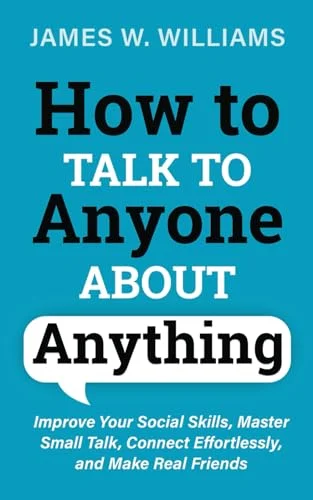
How to Talk to anyone About Anything: Improve Your Social Skills, Master Small Talk, Connect Effortlessly, and Make Real Friends (Communication Skills Training)
How to Talk to anyone About Anything: Improve Your Social Skills, Master Small Talk, Connect Effortlessly, and Make Real
James W. Williams
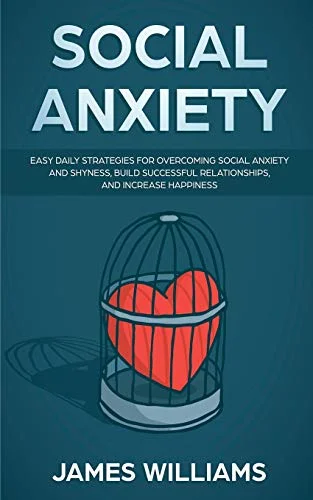
Social Anxiety: Easy Daily Strategies for Overcoming Social Anxiety and Shyness, Build Successful Relationships, and Increase Happiness
Social Anxiety: Easy Daily Strategies for Overcoming Social Anxiety and Shyness, Build Successful Relationships, and Inc

James W. Williams
Dating: Secrets for Introverts - How to Eliminate Dating Fear, Anxiety and Shyness by Instantly Raising Your Charm and Confidence with These Simple Techniques
Dating: Secrets for Introverts - How to Eliminate Dating Fear, Anxiety and Shyness by Instantly Raising Your Charm and C