“The Power of Words. Absolutely loved this eBook. My favorite chapter was chapter 4 - Verbal signs that someone is lying to you. **Pros** -Easy to read -Right on with the statistics, like Body language comms is 55% (actually think that it is higher) -Connection with the officers that talk to criminals and detect liars -Chapters 6, 7, & 8 were also spot on **Cons** -None, except I would like the author to create an audio version of the eBook Enjoyed the reading the eBook so much that I bought his compil...”
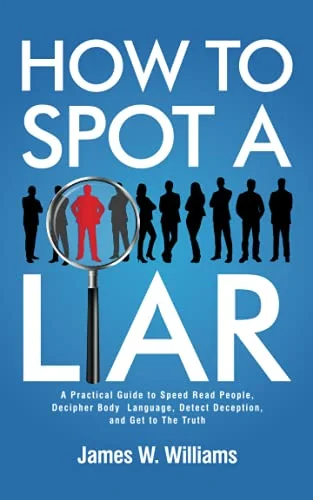
— Book by James W. Williams
How to Spot a Liar: A Practical Guide to Speed Read People, Decipher Body Language, Detect Deception, and Get to The Truth (Communication Skills Training)
How to Spot a Liar: A Practical Guide to Speed Read People, Decipher Body Language, Detect Deception, and Get to The Truth (Communication Skills Training)
Prices as of May 8, 2026 · subject to change on retailer.
You ask the question. They answer too fast, and the answer is too clean. Something inside you registers it before you do.
WHY PEOPLE LIE
Most books on lying treat the liar as the enemy. The book opens differently. People rarely lie because they're cruel. They lie because they're scared, embarrassed, trying to please, or protecting a self-image that wouldn't survive the truth. Reading the lie is half the work; reading the motivation underneath it is what makes the response actually useful.
WHAT THE BOOK COVERS
WHO IT'S FOR
The parent of teenagers who wants tools without becoming a prosecutor. The professional in sales, healthcare, or pastoral care where reading sincerity changes the call. Anyone who's been burned and is trying to rebuild a more accurate read of the people around them.
WHAT IT'S NOT
Not an academic text — it's practical, with examples drawn from research and field observation rather than full citation. Reviewers who wanted denser sourcing flagged that limit honestly. Treat it as a working manual, not a peer-reviewed paper.
The truth has a steady pulse. The lie has a tell. The question is whether you've trained yourself to feel the difference before you justify it away.
— James W. Williams
WHY PEOPLE LIE
Most books on lying treat the liar as the enemy. The book opens differently. People rarely lie because they're cruel. They lie because they're scared, embarrassed, trying to please, or protecting a self-image that wouldn't survive the truth. Reading the lie is half the work; reading the motivation underneath it is what makes the response actually useful.
WHAT THE BOOK COVERS
- The verbal signs. The chapter readers most often cite by name (Chapter 4) — patterns in word choice, distancing language, qualifier overload, the specific tells that show up when fiction has to compete with memory in real time.
- The body, in clusters. Mirroring breaks. Micro-expressions. The leg that won't stop. Single cues mean almost nothing; clusters of three to five converging are the actual signal — the same lesson taught in interrogation training.
- Why they're lying. Mapping motivations — fear, social cost, shame, gain — because the right response to a lie depends entirely on what's underneath it.
- What to do once you've spotted one. The under-discussed half. Not every lie deserves confrontation, and confrontation done badly creates more lies, not fewer. The book offers a calmer playbook.
- The honest limits of the method. Pathological liars and trained deceivers can defeat most of these signals. The book is candid about that — it's a useful filter, not a polygraph.
WHO IT'S FOR
The parent of teenagers who wants tools without becoming a prosecutor. The professional in sales, healthcare, or pastoral care where reading sincerity changes the call. Anyone who's been burned and is trying to rebuild a more accurate read of the people around them.
WHAT IT'S NOT
Not an academic text — it's practical, with examples drawn from research and field observation rather than full citation. Reviewers who wanted denser sourcing flagged that limit honestly. Treat it as a working manual, not a peer-reviewed paper.
The truth has a steady pulse. The lie has a tell. The question is whether you've trained yourself to feel the difference before you justify it away.
— James W. Williams
— Readers say
What readers are saying.
“Pretty thorough. The book is pretty thorough in it's descriptions of liars, the lies they tell and to what degree they are telling them. It covers everything from little white lies parents tell their kids (like Santa Claus being real) to much serious lies, like when a spouse is cheating. The book then dives into how to spot the lies as they're being told to you, mostly from physical cues. The book's methods are not 100% effective, though. I once dated a pathological liar who never exhibited the telltale phys...”
“Wish I Had Read Sooner. I got a lot of good information from this book. I recently called out someone about a lie they told me, and I handled the situation badly. Oh well! The biggest lesson I learned this book is to not shoot from the hip when dealing with a liar. Hopefully, I will not have to confront any more liars in my life.”
“Book title describes it perfectly!. This book is a great quick read for learning how to tell if someone is lying to you. Though I have a slightly different opinion than the author on some points, I found the book very well researched and informative as well as interesting. I especially liked the sections on why people lie, dealing with motives and how to read little nuances in body language. There are many tips that are great for learning how to read people in general. I also liked the pep talk at the end.”
“Really Interesting Read. WOW! I really learned a lot about lying. I'm shocked at how often, statistically, people do lie. I no longer trust anyone ... kidding. I recommend this book to really open your eyes to people's body language and what they say to hopefully, spot a liar and surround yourself with better people in your life. My kids better watch out! I applied what I learned yesterday while bathing my four year old. While I was putting away her toothbrush in the cabinet, I saw her in the mirror putting sha...”
“Enjoyable. I'm a fan of practical psychology books, especially those that give a bit of edge in today's world of narcissists and manipulators. This book is definitely a nice addition to my collection. A lot of attention is given to body language and other non-verbal signs. I found it helpful and would recommend to anyone who wants to master the art of communication,”
James W. Williams
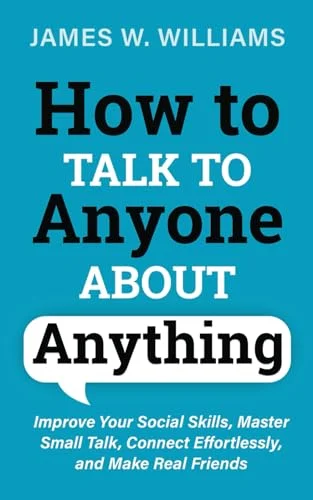
How to Talk to anyone About Anything: Improve Your Social Skills, Master Small Talk, Connect Effortlessly, and Make Real Friends (Communication Skills Training)
How to Talk to anyone About Anything: Improve Your Social Skills, Master Small Talk, Connect Effortlessly, and Make Real
James W. Williams
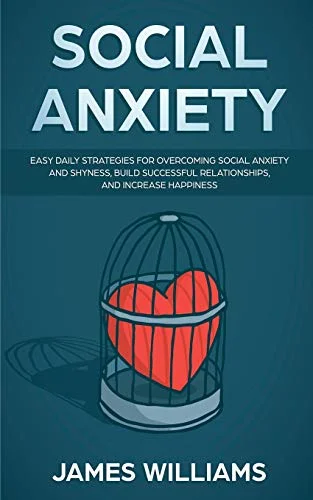
Social Anxiety: Easy Daily Strategies for Overcoming Social Anxiety and Shyness, Build Successful Relationships, and Increase Happiness
Social Anxiety: Easy Daily Strategies for Overcoming Social Anxiety and Shyness, Build Successful Relationships, and Inc
James W. Williams
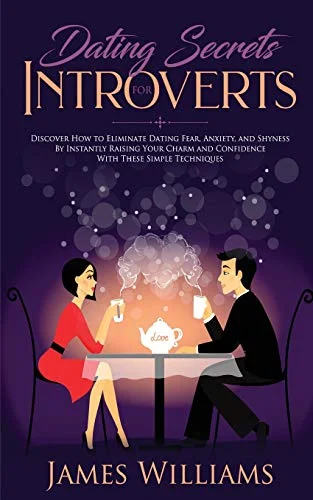
Dating: Secrets for Introverts - How to Eliminate Dating Fear, Anxiety and Shyness by Instantly Raising Your Charm and Confidence with These Simple Techniques
Dating: Secrets for Introverts - How to Eliminate Dating Fear, Anxiety and Shyness by Instantly Raising Your Charm and C