“This book has really helped me. I've been guilty for years of not being a very good listener. I grew up in a family with 8 siblings and, since my parents were divorced, a split household. I'm not making excuses, I'm 43 years old and have been through two divorces, I should know better by now. I am, however, explaining how I got here. Conversations in our house were frequently hectic with everyone just trying to get their thoughts in, so this is what I was conditioned to do. It definitely helped cost me my first marriage. My...”
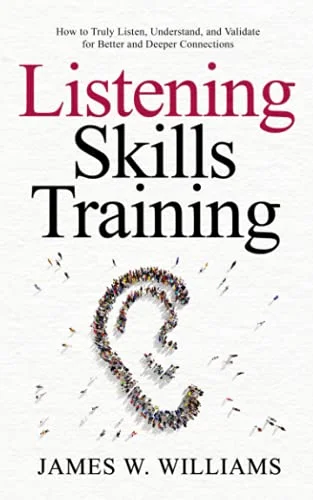
— Book by James W. Williams
Listening Skills Training: How to Truly Listen, Understand, and Validate for Better and Deeper Connections (Communication Skills Training)
Listening Skills Training: How to Truly Listen, Understand, and Validate for Better and Deeper Connections (Communication Skills Training)
Prices as of May 8, 2026 · subject to change on retailer.
In a film, when one character speaks at length, the camera is on the other person. Stories don't move on speech. They move on reception.
WHY LISTENING IS THE HARDER HALF
Most people think they're good listeners. Their partners disagree. The book opens with a quiet observation: we're trained from childhood to formulate the next thing to say while the other person is still speaking. Listening — actual listening — is a learned reversal of that habit, and it costs more than it looks.
WHAT THE BOOK COVERS
WHO IT'S FOR
The partner who keeps hearing "you don't actually listen to me." The manager whose team members go quiet in one-on-ones. The reader who realized, halfway through a relationship, that they'd been conducting both sides of every conversation in their own head. Anyone who suspects their listening is a performance, not a presence.
WHAT IT'S NOT
Not a clinical text on therapeutic listening. Not a deep-dive on motivational interviewing. The strength is field-manual quality — short, scripted, written for someone who has a hard conversation tomorrow morning and wants to handle it differently this time.
Two ears, one mouth — and most of the work is happening in the eyes.
— James W. Williams
WHY LISTENING IS THE HARDER HALF
Most people think they're good listeners. Their partners disagree. The book opens with a quiet observation: we're trained from childhood to formulate the next thing to say while the other person is still speaking. Listening — actual listening — is a learned reversal of that habit, and it costs more than it looks.
WHAT THE BOOK COVERS
- Validation as the move that matters most. Not agreement, not advice — just signaling that the other person's experience landed. Multiple readers said this single distinction reframed every difficult relationship they were in.
- Active listening, broken into reps. The pause. The clarifying question. The mirror that doesn't parrot. The components isolated so you can practice them one at a time.
- What you bring to the table. Family-of-origin patterns — hectic households where everyone fought for airtime — and the listening style they install. The book asks what you were conditioned to do before it asks you to change it.
- Real-life conversation scripts. Reviewers flagged these as the most repeatable part: short dialogue patterns mapped to common situations (partner venting after work, employee under pressure, child melting down).
- Listening at work. Why feedback that focuses only on what's lacking — without naming what's working — produces the disengagement most managers complain about. Validation, again, named as the missing layer.
WHO IT'S FOR
The partner who keeps hearing "you don't actually listen to me." The manager whose team members go quiet in one-on-ones. The reader who realized, halfway through a relationship, that they'd been conducting both sides of every conversation in their own head. Anyone who suspects their listening is a performance, not a presence.
WHAT IT'S NOT
Not a clinical text on therapeutic listening. Not a deep-dive on motivational interviewing. The strength is field-manual quality — short, scripted, written for someone who has a hard conversation tomorrow morning and wants to handle it differently this time.
Two ears, one mouth — and most of the work is happening in the eyes.
— James W. Williams
— Readers say
What readers are saying.
“good. It was very informative and I learned a few things from it . If you are someone who needs ideas how to listen to others besides themselves.”
“An eye opener: I feel validated after reading this book. I really enjoyed this book. I felt it opened my eyes. Two months ago, I quit a well-paying job. I did not like the way my supervisor talked and treated me. In reading this book, I could identify what the real issues were in our relationship. First, this book clearly identified one of the issues in our relationship. There was no validation in our relationship. For it did matter how much hard I worked, he always focused on the negatives and what he considered lacking in my performance. Se...”
“Listening is more important than talking. I sat in the office with my professor and asked him, what do I need to do to get an A in this class? He said listen. The problem with students is that they don't listen. I said okay. Then we went on. at first, I thought it "boring", but then I started to hear nuggets of wisdom. That was a powerful lesson. I learned more than listening than I did before. I'm not advocating silence. You can ask questions to clarify points, but don't be too eager to share your views unless you heard the other vi...”
“Very good read and easy to follow. This was a very good book and I feel that it is going to increase my quality of life. People want to be heard and validated and this book really helps you to stop and smell the roses, so to speak. We have two ears and one mouth for a reason and this author uses great analogies and writes very well.”
“A Good Introduction to Listening Skills. When you watch a movie and one character speaks at length, the camera is generally on the other person. The reason is simple, to forward the story, it's much more important how an idea is received than how it is conveyed. As an actor, listening is one of those skills that I spend a lot of time developing. So it was with some intrigue and some trepidation that I read "Listening Skills Training" by James W. Williams: intrigue because I"m always curious to learn more about my craft; trepidatio...”
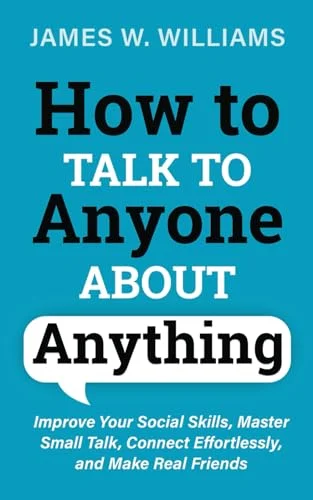
James W. Williams
How to Talk to anyone About Anything: Improve Your Social Skills, Master Small Talk, Connect Effortlessly, and Make Real Friends (Communication Skills Training)
How to Talk to anyone About Anything: Improve Your Social Skills, Master Small Talk, Connect Effortlessly, and Make Real
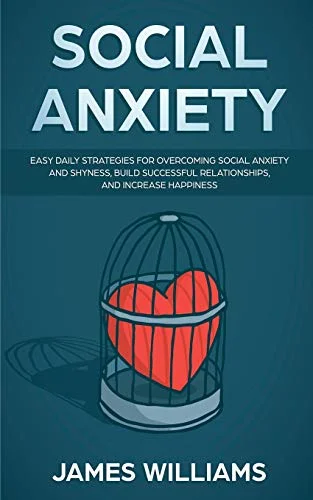
James W. Williams
Social Anxiety: Easy Daily Strategies for Overcoming Social Anxiety and Shyness, Build Successful Relationships, and Increase Happiness
Social Anxiety: Easy Daily Strategies for Overcoming Social Anxiety and Shyness, Build Successful Relationships, and Inc
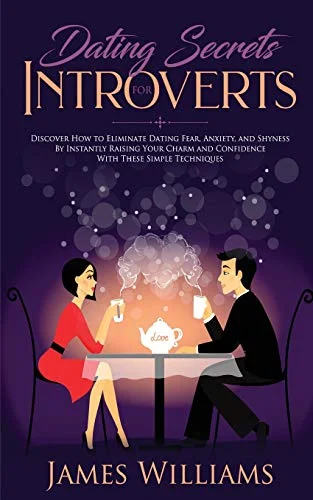
James W. Williams
Dating: Secrets for Introverts - How to Eliminate Dating Fear, Anxiety and Shyness by Instantly Raising Your Charm and Confidence with These Simple Techniques
Dating: Secrets for Introverts - How to Eliminate Dating Fear, Anxiety and Shyness by Instantly Raising Your Charm and C