“Dark Psychology. This book lets me look at things in a whole new perspective and opened my eyes to new possibilities. I love Psychology. I'm glad to have found a book that combines both subjects. I cannot wait to get into reading this book. It's in my queue to read next!”
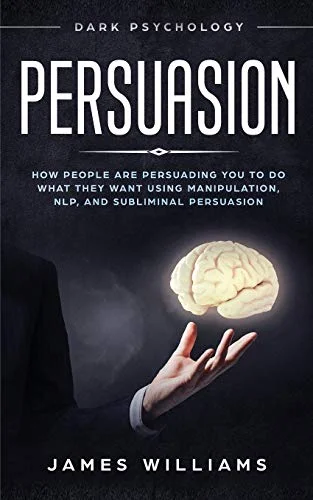
— Book by James W. Williams
Persuasion: Dark Psychology - How People are Influencing You to do What They Want Using Manipulation, NLP, and Subliminal Persuasion
Persuasion: Dark Psychology - How People are Influencing You to do What They Want Using Manipulation, NLP, and Subliminal Persuasion
Prices as of May 8, 2026 · subject to change on retailer.
Persuasion happens whether you know about it or not. The question isn't whether to engage — it's whether to engage informed.
WHAT THE BOOK IS
A defensive primer on persuasion as it appears in everyday life — sales, advertising, politics, social media, intimate relationships. The premise is direct: most of what's done to you persuasively is invisible until named. The book gives you the vocabulary so you can choose what you say yes to.
WHAT THE BOOK COVERS
WHO IT'S FOR
The reader who wants a short, defensive primer rather than Cialdini's longer academic treatment. Someone who suspects they're being persuaded constantly and wants vocabulary to point at it. The professional in marketing, sales, or product who needs the ethics framework alongside the tactics.
WHAT IT'S NOT
Not Cialdini-depth — the original "Influence" goes further on every principle. Not an academic treatment of social psychology research. The book is short on purpose: a starter glossary and a defensive frame, written for a reader who needs to recognize what's happening before they need the deeper theory.
The first defense against persuasion is naming it. The second is asking what's true here, regardless of who said it. The third is being willing to say no even when saying yes is easier.
— James W. Williams
WHAT THE BOOK IS
A defensive primer on persuasion as it appears in everyday life — sales, advertising, politics, social media, intimate relationships. The premise is direct: most of what's done to you persuasively is invisible until named. The book gives you the vocabulary so you can choose what you say yes to.
WHAT THE BOOK COVERS
- The classic principles, recognizable. Reciprocity, scarcity, authority, social proof, liking, commitment-and-consistency. Cialdini's framework explained simply, with examples drawn from situations you'll recognize.
- Where persuasion crosses into manipulation. The line: persuasion respects your ability to say no; manipulation engineers situations where saying no costs more than saying yes. The book is precise about the distinction.
- Online influence patterns. Algorithmic recommendation, parasocial trust, urgency stacking, fake scarcity. The specific moves that show up in your feed and inbox every day.
- Defending without becoming cynical. The trap most defensive readers fall into — treating every interaction as suspect. The book argues for selective skepticism, applied at the moments that actually matter.
- The mirror. The under-discussed half: when do you use these moves? On your kids? Your partner? Yourself? The book turns the lens around so the framework doesn't quietly become a manipulation manual.
WHO IT'S FOR
The reader who wants a short, defensive primer rather than Cialdini's longer academic treatment. Someone who suspects they're being persuaded constantly and wants vocabulary to point at it. The professional in marketing, sales, or product who needs the ethics framework alongside the tactics.
WHAT IT'S NOT
Not Cialdini-depth — the original "Influence" goes further on every principle. Not an academic treatment of social psychology research. The book is short on purpose: a starter glossary and a defensive frame, written for a reader who needs to recognize what's happening before they need the deeper theory.
The first defense against persuasion is naming it. The second is asking what's true here, regardless of who said it. The third is being willing to say no even when saying yes is easier.
— James W. Williams
— Readers say
What readers are saying.
“.. Very good book on defining and explaining how persuasion can be used for good and evil intentions. Very good explanation.”
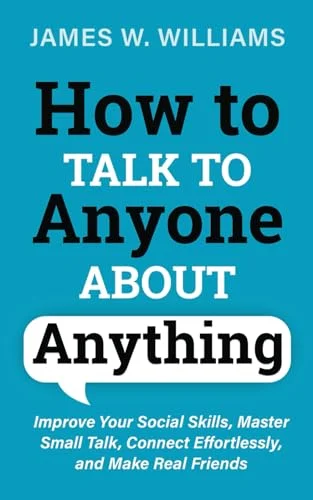
James W. Williams
How to Talk to anyone About Anything: Improve Your Social Skills, Master Small Talk, Connect Effortlessly, and Make Real Friends (Communication Skills Training)
How to Talk to anyone About Anything: Improve Your Social Skills, Master Small Talk, Connect Effortlessly, and Make Real
James W. Williams
Social Anxiety: Easy Daily Strategies for Overcoming Social Anxiety and Shyness, Build Successful Relationships, and Increase Happiness
Social Anxiety: Easy Daily Strategies for Overcoming Social Anxiety and Shyness, Build Successful Relationships, and Inc
James W. Williams
Dating: Secrets for Introverts - How to Eliminate Dating Fear, Anxiety and Shyness by Instantly Raising Your Charm and Confidence with These Simple Techniques
Dating: Secrets for Introverts - How to Eliminate Dating Fear, Anxiety and Shyness by Instantly Raising Your Charm and C