
We’ve turned a basic survival skill into a premium subscription. Every tech company, every corporate retreat, every podcast with a decent microphone now treats emotional intelligence like a hidden cheat code for modern life. The phrase gets slapped on workshop agendas and LinkedIn posts until it loses its edges. People nod at it the way they nod at alignment or synergy — a polite acknowledgment that sounds important but doesn’t change how they act at two p.m. on a Tuesday. You don’t need another seminar about it. You just need to know what it actually looks like when it’s not being sold to you. The gap between the marketing and the mechanics is wide. It’s also where most of the real work happens.
The real work behind emotional intelligence
We measure everything else with numbers, but we still guess at how people are actually operating. The current obsession with emotional intelligence treats it like a personality trait you either have or you don’t, like being left-handed or having perfect pitch. That’s not how it works. It’s a set of habits. You notice a tightness in your chest before you send a defensive email. You pause for three seconds when someone interrupts your idea in a meeting. You catch yourself blaming your partner for a mood that started with your own poor sleep. These aren’t mystical insights. They’re mechanical adjustments. I spent years thinking I was just too direct with people, which was my polite way of saying I had no idea how my tone landed until the other person walked out of the room. It took a lot of awkward conversations to figure out that I wasn’t lacking empathy. I was just skipping the step where I actually noticed what was happening inside me first.
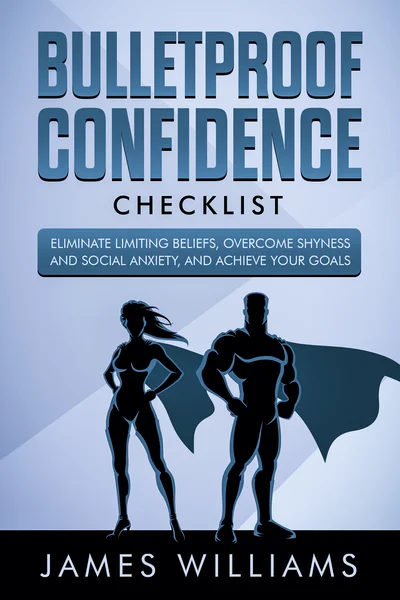
“Having been working in various industries for years and meeting people from all walks of life, I have found out that communicating your thoughts, feelings, and ideas is highly important for a lot of reasons.”
— James W. Williams, Communication Skills Training
Most people treat emotional intelligence like a filter they put on before they speak. You take your raw thought, run it through a kindness module, and output a polished sentence. That approach fails because it treats your internal state like a problem to solve instead of data to read. When you ignore the physical signals your body gives you — the shallow breathing, the clenched jaw, the sudden urge to change the subject — you’re flying blind. You’re reacting to a story you made up instead of the room you’re actually in. I used to think reading a room meant guessing what the other person wanted to hear. Now I know it just means noticing what you’re about to do wrong, and choosing to do it slower.
The obvious angle here would be to tell you to meditate more or journal your feelings. That helps, sure. But it misses the friction of real-time application. Emotional intelligence doesn’t show up when you’re sitting alone with a cup of tea. It shows up when your boss questions your timeline in front of the team. It shows up when a friend cancels plans for the third time and you feel that familiar spike of rejection. You can’t practice it in a vacuum. You have to practice it in the exact moments you’d rather shut down or snap. And that’s the part nobody likes to admit. It’s uncomfortable. It requires you to sit with your own irritation instead of dumping it on the nearest person.
There’s a persistent myth that if you didn’t learn it by age twelve, you’re stuck with whatever wiring you got. I believed that for a long time. It made me lazy. It gave me a neat excuse to blame my upbringing for every strained conversation. But the nervous system doesn’t work like a locked vault. It adapts. It rewires. You just have to give it new inputs. The people who seem to have high emotional intelligence naturally usually had parents who modeled it, or they learned through trial and error in high-stakes jobs. The rest of us have to build it from scratch, which means accepting that you will feel clumsy at first. You will misread a situation. You will apologize to the wrong person. You will overcorrect. That’s not failure. That’s the training phase.
If you want to see how this translates to actual behavior, look at how people handle confidence building. It’s the same mechanism. You don’t wait to feel ready before you speak up. You speak up, notice the physical shake in your hands, and learn to tolerate the discomfort until it normalizes. Emotional intelligence follows the exact same pattern. You notice the reaction. You don’t act on it immediately. You build a gap between the trigger and the response. Over time, the gap gets wider. The impulse to react loses its grip.
People keep asking whether it matters more than IQ or technical skill. The answer depends entirely on the room. In a quiet lab with a single problem, raw processing power wins. In any environment where humans actually interact, emotional intelligence dictates the ceiling. You can have the sharpest strategy in the building, but if you can’t read the tension when you present it, or if you bulldoze the quiet person who actually knows the solution, you’ll watch it stall. The Yale School of Medicine has pointed out how workplace success starts with emotional intelligence, but they usually frame it as a leadership advantage. It’s simpler than that. It’s just about not tripping over your own feet when the stakes are high.

What it looks like when you’re actually doing it
I was sitting at a long wooden table in a borrowed conference room, watching a guy named David try to explain why a project had stalled. He was twenty minutes behind schedule, his slides were out of order, and the room felt heavy with unspoken frustration. Instead of cutting him off, I noticed my own shoulders creeping up toward my ears. I felt that familiar urge to take over, to rescue the meeting, to prove I knew how to run things. My hands gripped the edge of the table. I took a slow breath and let the silence stretch. David kept talking. He stumbled through his explanation, then circled back to a detail I hadn’t caught before. The delay wasn’t incompetence. It was a vendor issue he’d been quietly managing while I assumed he was just dropping the ball. I would have looked like a hero if I’d jumped in. I would have also made him look small, and we’d have lost a month of trust for a single moment of ego.
That’s the unglamorous reality of emotional intelligence in practice. It’s rarely about saying the perfect thing. It’s usually about doing nothing when everything in you wants to intervene. You watch the conversation unfold. You track your own irritation like a weather system. You let other people have their messy, incomplete sentences without rushing to fix them. Most people confuse this with passivity. It isn’t. It’s restraint with a purpose. You hold back not because you’re afraid, but because you’re paying attention.
When you skip this step — when you constantly react without checking your own temperature — you pay a tax. It’s not just awkward conversations or strained relationships. It’s a slow drain on your nervous system. You carry the residual tension from every unexamined argument into the next day. Your jaw stays tight. Your sleep gets shallow. Anxiety doesn’t always arrive as panic attacks. Sometimes it’s just the accumulated weight of a hundred tiny interactions you never processed, just swallowed. I’ve seen people burn out from jobs they technically loved, simply because they spent three years treating every minor friction as a personal attack. They never learned to separate the event from their interpretation of it. That’s what low emotional intelligence actually costs you. It’s not a missed promotion. It’s chronic exhaustion.
Or — actually, that’s not quite right. It’s not just about separating event from interpretation. It’s about recognizing that your interpretation is an event. Your brain fires off a threat response before your eyes finish reading the email. You can’t logic your way out of a physiological reaction. You have to out-wait it. That’s the part nobody puts on the workshop slides. You just sit there. You count your breaths. You let the chemical spike run its course. It takes about ninety seconds for the initial surge to fade if you don’t feed it with more thoughts. Try it next time you get a defensive text message. Read it once. Put the phone face down. Watch the clock. You’ll notice the urge to fire back peaks, then cracks, then breaks apart entirely.
This is where mindfulness meditation stops being a spiritual exercise and starts functioning as a practical tool. You’re not trying to clear your mind. You’re training your attention to catch the drift before it pulls you under. It’s the same rep. Different context. I used to think meditation meant sitting perfectly still while my thoughts scattered. I was wrong. It’s just noticing when you’ve drifted, and gently pulling back. That exact motion applies to a tense conversation with your spouse. You notice you’ve drifted into defensiveness. You pull back. You ask a question instead of making a statement. It feels unnatural the first dozen times. Then it just becomes how you talk.
The daily practice is painfully simple. Ask yourself one question before you give an opinion: Am I trying to solve this, or am I trying to be right? Write down what you felt after a hard conversation. Don’t just replay what was said. Track the physical shift. Small things. Repeatable. They work because they don’t require you to change your personality. They just require you to pay attention. And paying attention, consistently, is harder than most people expect. It means tolerating the quiet. It means letting other people figure out their own words. It means trusting that the conversation will find its way without you steering it into the ditch.

Why it sticks when you stop trying to fix people
| Common Myth | Actual Reality |
|---|---|
| Fixed personality trait | Trainable daily skill |
| Relies solely on innate empathy | Built through deliberate practice |
| Means avoiding all conflict | Navigates tension constructively |
| Requires years of coaching | Grows from small, consistent reps |
The biggest mistake I made early on was treating emotional intelligence like a diagnostic tool. I thought if I could just figure out what was wrong with everyone else, I could adjust my approach and everything would smooth out. That’s not how it works. You can’t outsmart someone else’s defensiveness by being perfectly calibrated. People aren’t puzzles. They’re just carrying their own unprocessed baggage into the room, same as you.
Emotional intelligence shifts when you stop aiming it outward and start aiming it inward. You notice your own patterns. You see how you shut down when criticized. You catch how you overcompensate with humor when you feel insecure. Once you map your own terrain, you stop taking other people’s reactions so personally. You realize most of the friction isn’t about you at all. It’s about timing, fatigue, old wounds, and mismatched expectations. That realization doesn’t make you a saint. It just makes you less reactive. And less reactive people get more done.
You don’t need to overhaul your communication skills overnight. You just need to stop treating every interaction like a test. Most of the time, it’s just two tired people trying to coordinate their schedules. Lower the stakes. Notice your own breathing. Let the silence do the heavy lifting. The room will settle. You’ll feel your shoulders drop. And you’ll realize you’ve been carrying a weight that wasn’t yours to begin with.
Frequently Asked Questions
Is emotional intelligence a fixed personality trait?
Emotional intelligence is not a fixed trait but a highly trainable skill you can develop over time. Research shows that consistent practice rewires your brain to better recognize and regulate emotions. Start by tracking your emotional triggers in a journal to build self-awareness.
How can I improve my emotional intelligence quickly?
You can improve your emotional intelligence by practicing small, intentional habits every single day. Focus on active listening during conversations and pause for three seconds before reacting to stressful situations. These micro-reps compound quickly into lasting behavioral change.
What is the best daily exercise to build emotional intelligence?
The most effective daily exercise is a simple five-minute reflection on your recent interactions. Ask yourself what emotions drove your decisions and how your responses affected others. This consistent self-audit sharpens your empathy and impulse control.
Does emotional intelligence matter more than IQ in the workplace?
Yes, emotional intelligence often outperforms IQ when predicting long-term career success and leadership effectiveness. While technical skills get you hired, the ability to navigate complex social dynamics and manage stress keeps you promoted. Cultivating these interpersonal skills will give you a distinct competitive advantage.