
Three years ago, I sat across from a guy named Marcus at a cramped Thai restaurant in downtown Portland. He’d just been promoted to team lead — his first time managing people — and he looked like someone who’d swallowed a wasp. “I have to tell Sarah her client reports are terrible,” he said, pushing pad thai around his plate. “But she cries. Every time anyone says anything, she cries. So I just… rewrite them myself at midnight.” Marcus didn’t have a Sarah problem. He had a how to give feedback problem. And he’s not alone — most of us would rather eat glass than tell someone they’re doing something wrong.
That conversation stuck with me because I recognized myself in it. For years, I did the same thing Marcus did. I’d avoid the hard conversation, silently fix the problem, and then resent the person for not magically improving. It took an embarrassing blowup with a colleague — where months of unspoken frustration came out sideways during a meeting — for me to realize that avoiding feedback isn’t kindness. It’s cowardice wearing a nice mask.
The ability to give honest, specific, non-destructive feedback is probably the most underleveraged communication skill most people have. Not because they don’t know it matters, but because everything about it feels risky. You might hurt someone’s feelings. They might get defensive. They might cry. They might hate you. So you say nothing, and the problem festers until it becomes ten times harder to address.
Here’s what I’ve figured out after getting this wrong more times than I’d like to admit: giving constructive criticism isn’t about finding the perfect words. It’s about understanding what’s actually happening in the other person’s brain when they hear criticism — and working with that reality instead of against it.
Your Brain on Criticism: Why Feedback Feels Like an Attack
Before we get into technique, you need to understand something about neuroscience. When someone receives critical feedback, their brain responds similarly to a physical threat. Neuroscientist Naomi Eisenberger’s research at UCLA (published in Science, 2003) showed that social rejection activates the same brain regions as physical pain — specifically the dorsal anterior cingulate cortex. Criticism, even mild criticism, can trigger this same neural alarm system.
This means the person you’re giving feedback to isn’t being “too sensitive” or “dramatic.” Their brain is literally processing your words as danger. Their prefrontal cortex — the rational thinking part — gets partially hijacked by the amygdala, which is busy screaming “THREAT.” That’s why people get defensive, shut down, or lash out when they hear something negative about their work.
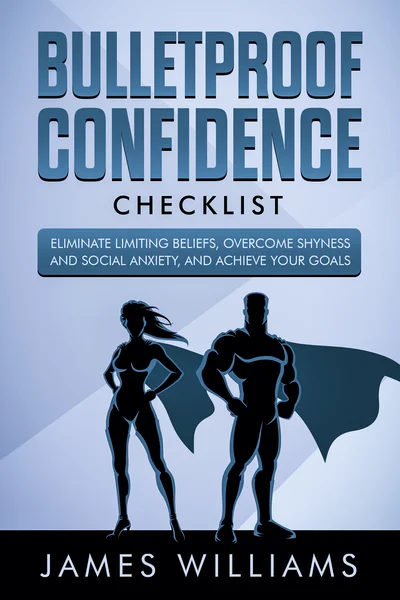
“More often than not, it is the way we provide and receive feedback that is problematic, not the content itself. Your biggest problem here will always be your perceptions.”
— James W. Williams, Communication Skills Training
I used to think people who couldn’t “handle feedback” were weak. I was wrong about that, and changing my mind on it made me dramatically better at actually getting through to people. Once you accept that the brain treats criticism like a threat, you stop blaming the listener and start taking responsibility for how you deliver the message. That shift changes everything.

How to Give Feedback That Actually Lands
Okay, so the other person’s brain is primed to freak out. Now what? You can’t just never say anything. That’s how you end up like Marcus — rewriting reports at midnight and slowly building resentment. The goal isn’t to avoid feedback. It’s to deliver it in a way that the other person can actually hear.
Separate the Person from the Action
This is the single most important thing I’ve learned about giving constructive criticism, and I still have to remind myself of it constantly. When you criticize someone’s behavior, you’re giving them something to fix. When you criticize their character, you’re giving them something to defend.
“You’re careless with details” hits different than “The last three reports had data errors in section two.” The first one is an identity statement — you’re telling them who they are. The second is a behavioral observation — you’re telling them what happened. One triggers defensiveness. The other triggers problem-solving.
| Character Attack (Triggers Defense) | Behavioral Observation (Triggers Problem-Solving) |
|---|---|
| “You’re disorganized” | “The project timeline wasn’t updated last week” |
| “You don’t listen” | “In the meeting, you responded before I finished my point” |
| “You’re too aggressive with clients” | “The email to the client used language that felt confrontational — here’s what I mean” |
| “You’re lazy” | “The deadline was missed by two days without a heads-up” |
See the difference? The left column makes people want to argue. The right column gives them something specific to change. I keep this distinction taped to the inside of my notebook because even after years of practice, my instinct under stress is still to go for the character judgment.
Check Your Motivation Before You Open Your Mouth
This one’s uncomfortable, but it matters. Before you give someone feedback, ask yourself: why am I doing this? Am I trying to help them improve? Or am I frustrated and looking for a release valve?
I’ve caught myself plenty of times about to give “feedback” that was really just me being annoyed. The words might sound constructive, but the energy behind them is punitive. People pick up on that instantly. They might not be able to articulate it, but they can feel the difference between someone who wants to help them grow and someone who wants to make them feel bad.
“A crucial step to learn here is to always separate the person from his actions. It’s not that they are stupid or idiotic or evil, it’s just that they did something not exactly good in that instance.”
— James W. Williams, Communication Skills Training
If you realize your motivation is more about venting than helping, wait. Go for a walk. Write it down and don’t send it. Come back when you can genuinely say, “I’m telling you this because I want things to go better for you.” That’s not a trick — people can tell when it’s real.
The Criticism Sandwich — and Why It Only Half Works
You’ve probably heard of this: say something positive, deliver the criticism, end on a positive note. It’s a staple of management training everywhere. And look — it’s not terrible. It’s better than just walking up to someone and saying “your work is bad.” But there’s a problem with it that nobody talks about.
People learn the pattern fast. After the second or third time, the moment you open with a compliment, they’re already bracing for the “but.” The positive comments start to feel hollow — like wrapping paper around a brick. A 2013 study by researchers Losada and Heaphy, discussed in Harvard Business Review, found that the ratio of positive to negative feedback matters more than the sandwich structure itself. Teams that thrived had roughly a 5:1 ratio of positive to negative interactions overall — not crammed into a single conversation.
So here’s what I do instead: I give genuine positive feedback frequently and separately from criticism. When people know you notice and appreciate their good work on a regular basis, the occasional critical conversation doesn’t feel like a betrayal. It feels like part of a relationship where honesty goes both ways.

Receiving Feedback Gracefully: The Skill Nobody Practices
We spend all this time learning how to give feedback, but almost nobody practices receiving it. And honestly, how you take feedback determines whether people will ever be honest with you again.
I remember getting feedback from an editor early in my writing career. She told me, calmly, that a chapter I’d spent three weeks on “read like a textbook written by committee.” My first instinct was to explain — to defend every sentence, to tell her about my research process, to make her understand why it was actually good. I didn’t say any of that out loud, thank God. But I wanted to.
The instinct to explain away criticism is almost universal. It feels like self-preservation. But from the other person’s perspective, it looks like you’re not listening. And if they feel unheard, they’ll stop giving you honest feedback — which means you lose access to the information you need to get better. I’ve written about this dynamic in the context of rebuilding trust in relationships, and it applies just as strongly at work.
Build Up an Immunity by Asking First
The thing that stings most about feedback is the surprise. You’re going about your day, feeling decent about yourself, and then — wham. Someone tells you something you didn’t want to hear.
You can reduce that sting dramatically by asking for feedback before it’s offered. Try questions like:
- “If you could suggest two things I should do differently, what would they be?”
- “Is there a better way I could have handled that?”
- “If you were in my position, what would you change?”
When you ask proactively, two things happen. First, you psychologically prepare yourself to hear something critical — so it doesn’t blindside you. Second, you signal to the other person that it’s safe to be honest. Most people hold back their real observations because they’re afraid of your reaction. Asking removes that fear.
Reflect Before You Respond
This is the hardest part for me, and I still mess it up sometimes. When someone gives you feedback, your immediate response is almost always wrong. It’s either defensive (“well, the reason I did that was…”) or dismissive (“yeah, I know, I was going to fix that”). Neither one helps.
Instead, try saying nothing for a few seconds. Let the feedback sit. Then say something like, “I need to think about that — give me a day.” This isn’t avoidance. It’s giving your prefrontal cortex time to catch up with your amygdala. The response you craft after reflection will be ten times more productive than whatever your gut wanted to say in the moment.

The Invisible Feedback Killer: Vagueness
I want to talk about something that ruins more feedback conversations than hostility does: being vague. People default to vagueness because it feels safer. “Your presentation could be better” is less confrontational than “Your presentation had no clear structure and the data on slide seven contradicted slide three.” But vague feedback is almost useless.
When feedback is vague, the receiver has to guess what you mean. And they’ll almost always guess wrong — usually in the direction of either “it’s not that bad” or “everything I do is terrible.” Neither interpretation leads to improvement.
| Vague Feedback (Unhelpful) | Specific Feedback (Actionable) |
|---|---|
| “Be more professional in emails” | “In the email to the client Tuesday, the opening line felt too casual for the context — try leading with the project update next time” |
| “Your attitude needs work” | “In the last two team meetings, you sighed audibly when others were presenting. It made them uncomfortable” |
| “Good job, keep it up” | “The way you structured the quarterly report — leading with the key finding instead of background — made it much easier to read” |
Notice that specificity applies to positive feedback too. “Good job” is nice to hear but teaches nothing. Telling someone exactly what they did well gives them a repeatable behavior. This connects to something I’ve explored in bringing energy to conversations — specificity is what makes any interaction feel real instead of performative.
The Counterintuitive Truth About How to Give Feedback
Here’s something I didn’t expect to learn: the best feedback conversations I’ve ever had — both giving and receiving — didn’t feel like feedback at all. They felt like two people trying to figure something out together.
The worst feedback conversations have a clear power dynamic: one person is the judge, the other is being judged. The best ones feel collaborative. “Here’s what I noticed. Here’s what I think might help. What do you think?” That last question — “what do you think?” — changes the entire dynamic. It turns a verdict into a discussion.
I’ll be honest: I don’t always get this right. Last month I gave a colleague feedback about a project delay, and I could feel myself slipping into lecture mode halfway through. I caught it, stopped, and said, “Sorry — I’m talking at you, not with you. What’s your take on what happened?” The conversation shifted immediately. She told me about a bottleneck I didn’t even know existed. If I’d kept lecturing, I never would have learned that.
“Striking a balance between your ability to express and receive information can help you engage more with people.”
— James W. Williams, Communication Skills Training
That balance — between expressing your observations and genuinely listening to the other person’s perspective — is what separates feedback that changes behavior from feedback that just creates resentment. It’s also what makes the difference between a boss people tolerate and a boss people actually want to work for.
One Thing to Try This Week
Pick one person in your life — a colleague, a friend, a partner — and ask them this question: “What’s one thing I could do differently that would make things better between us?” Then shut up and listen. Don’t explain. Don’t defend. Just take it in.
It’ll feel uncomfortable. That’s the point. The discomfort is your brain’s threat-detection system firing, and you’re going to let it fire without acting on it. That’s how you build the skill of treating feedback like practice instead of punishment.
You might be surprised by what you hear. Or you might hear something you already knew but didn’t want to admit. Either way, you’ll have done something that 90% of people never do: you’ll have voluntarily made yourself a little vulnerable in exchange for information that can actually make you better.
And if you want to go deeper on the mechanics of feedback communication skills — the specific techniques for reading cues, adjusting your delivery to different personality types, and handling the conversations that make your palms sweat — Communication Skills Training lays it out in a way that’s actually usable, not just theoretically nice.
Marcus, by the way, eventually had that conversation with Sarah. She didn’t cry. She said, “I’ve been waiting for someone to actually tell me what was wrong instead of just being weird about it.” Turns out the thing he was most afraid of was the thing she most wanted.
Frequently Asked Questions
What if someone gets emotional when I give them feedback?
Let them. Don’t rush to fix the emotion or backtrack on what you said. Say something like, “I can see this is hitting hard — take whatever time you need.” The emotion isn’t a sign you did something wrong. It’s a sign the feedback matters to them. Give them space, then continue when they’re ready.
Is the feedback sandwich actually bad?
It’s not bad — it’s just limited. The real issue is when people use it as a formula every single time, so the positive parts start feeling fake. A better approach: give genuine praise regularly and separately, so when you do need to deliver criticism, it doesn’t need to be gift-wrapped to be heard.
How do I give feedback to someone who outranks me?
Frame it as your experience, not their flaw. “When the deadline changed without a heads-up, I wasn’t sure how to reprioritize” is easier to hear than “You keep changing deadlines.” Focus on impact — what happened as a result — rather than judgment of their behavior.
How often should I ask for feedback?
Often enough that it stops feeling weird — maybe once every couple of weeks with people you work closely with. The goal is to normalize it so it’s not a big event. Think of it like checking the weather: just a quick, routine thing you do to stay informed.
Can you give too much feedback?
Absolutely. If every interaction becomes a feedback session, people start avoiding you. Pick the things that actually matter — the patterns, not the one-offs. If someone makes a mistake once, let it go. If they make it three times, that’s a pattern worth addressing.