
“Why does small talk feel so fake when I’m just trying to be normal?” Small talk feels fake when you treat it like a performance instead of a low-stakes way to check if another person is safe, open, tired, rushed, curious, or done. You don’t need better lines. You need a better read on the room and a few simple moves you can repeat when your brain goes blank.
I used to hate small talk because I thought it exposed me. If I couldn’t say something funny, sharp, or memorable in the first thirty seconds, I assumed I’d failed. That made every hallway conversation feel like an oral exam where nobody had handed me the study guide.
“The global culture is a complex and diverse one, and it's clear that much more cultural sensitivity is needed both in our everyday life and particularly in the workplace.”
— James W. Williams, Emotional Intelligence
Small talk got easier when I stopped trying to be interesting and started trying to be easy to be around. That sounds softer than it is. It means you listen with your face, ask questions that don’t trap people, notice when the conversation has served its purpose, and stop dragging dead sentences across the floor.
And yes, sometimes it still gets weird. Good. Weird is part of the price of being a human with a mouth.
Small talk is not a talent contest
Most of us now live in a strange social split: we type all day, react with tiny icons, then expect ourselves to sound relaxed when a real person stands three feet away holding a paper plate.
The first mistake is treating small talk as proof of personality. You walk into a work event or a family gathering and think, I need to be charming. No, you don’t. You need to help the other person feel where the conversation is going for the next minute.
That minute matters. Not because it changes your life. Because it lowers the pressure in the room.
Small talk is a social temperature check. You say, “How’s your day been?” and you’re not really asking for a full report. You’re giving the other person a door with a loose handle. They can open it a crack, push it wide, or leave it shut. A decent person respects all three.
I got this wrong for years. I thought every conversation had to move somewhere impressive. If someone said, “Busy week,” I treated it like a puzzle to solve. I would press for details, add my own story, or try to make the exchange mean something. Sometimes the other person just wanted to stand near the snack table and not be alone while they chewed a carrot.
Small talk does not need to become a deep connection every time. Sometimes it is just a polite bridge between two people who are sharing the same elevator, waiting room, conference table, or folding chair at a school event.
There is some good evidence that we underrate these tiny exchanges. A University of Arizona piece on a study called “Small Talk Not as Bad as Previously Thought” points to something I’ve noticed in real life: people often enjoy casual conversation more than they expected. The gap is the problem. We predict pain, so we tense up before anything has happened.
The American Psychological Association also covered research on how people often enjoy deeper conversations with strangers more than they think they will. The article, “Getting beyond small talk”, is useful because it doesn’t say casual talk is worthless. It suggests many of us underestimate how willing other people are to talk a little more honestly once the opening is handled well.
That’s the part most advice skips. Small talk is not the enemy of real conversation. Bad small talk is. Forced small talk. Interrogation small talk. Resume-reading small talk. The kind where both people keep smiling with their lips while their eyes search for an exit.
Good small talk gives people a clean way in and a clean way out.
The shift from performing to noticing
Performing sounds like this: “What can I say that makes me look confident?” Noticing sounds like this: “What is happening in front of me?” One question points inward and tightens your chest. The other points outward and gives you material.
Material is everywhere. Someone is carrying a dented water bottle with stickers peeling off. The room is too hot. The meeting started eight minutes late. The dog at the park has one blue eye and one brown eye. The cashier is wearing a tiny rubber duck pinned to her lanyard. You don’t need a brilliant opener when the world keeps leaving objects on the table.
A simple observation works because it asks very little from the other person. “That line moved faster than I expected.” “This room is freezing.” “I always forget how loud this place gets.” These are not pickup lines. They are small, honest bids.
If the other person gives you one word and turns away, you have your answer. Leave them alone. Social confidence includes knowing when not to keep pushing.
If the other person adds detail, follow the detail. If they say, “Yeah, I come here because the line is usually short,” you can ask, “You nearby?” or say, “Smart. I picked the slowest line last time and aged six years.” Keep it light. Let the other person choose depth.
If your conversation skills feel rusty, this is where practice helps. Not theory. Practice. I wrote about this same idea in building confidence by doing what makes you nervous because confidence usually arrives after your hands have already been shaking for a while. Annoying, but true.
The moment small talk dies is not the problem
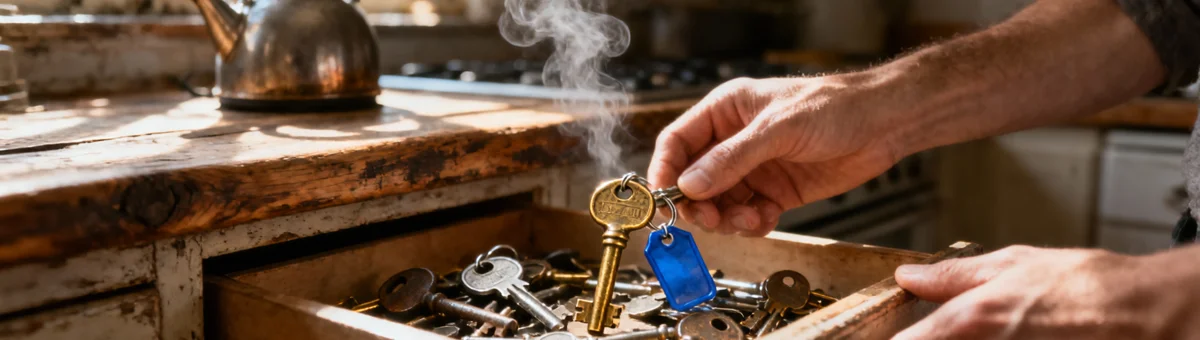
I was once sorting a drawer of mismatched keys while the kettle hissed behind me, and I found an old brass key with a blue plastic tag that said “garage” in faded marker.
I had no idea whose garage it opened. I stood there holding it like it should explain itself. That is exactly what a dead conversation feels like. You are holding a sentence that used to belong somewhere, and now both people are staring at it.
Small talk dies. It dies in job interviews, first dates, team lunches, parent-teacher nights, and those awful five minutes before a meeting starts when everyone pretends to read the agenda. A conversation going quiet does not mean you failed. It means the first thread ran out.
The recovery is the skill.
Most people panic at silence and start throwing words at it. They ask three questions in a row. They laugh too loudly. They repeat the last thing the other person said with a little upward sound, hoping the other person will rescue them. I know this because I have done all of it. More than once. With witnesses.
Silence feels bigger from inside your body than it looks from across the room. Two seconds can feel like a dropped tray. The other person may not even notice. They might be reading a menu, checking the time, or trying to remember if they turned off the oven. Your nervous system is not a reliable narrator in high-pressure small talk.
Use the three-part reset
When small talk gets awkward, don’t try to become smooth. Smooth is overrated. Use a reset you can remember while your brain is making dial-up noises.
- Name the tiny reality. Say something simple about the moment: “I lost my train of thought,” or “That question came out clunky.”
- Shift the angle. Move from facts to preference, from schedule to opinion, or from the event to the person’s experience.
- Offer an exit. Give the other person room to leave without making it weird: “I’m going to grab water in a second, but I wanted to ask…”
A reset might sound like this at a work event: “I completely lost where I was going with that. Long day. Are these events usually useful for you, or mostly something to survive?” That line is not magic. It is honest, slightly self-aware, and easy to answer.
On a first date, the reset might be smaller: “I just asked that like a job interviewer. Let me try again. What have you been into lately when nobody is making you be productive?” The correction takes pressure off the other person because you are not pretending the awkward moment didn’t happen.
After conflict, small talk gets trickier. Maybe you had a tense meeting with a coworker yesterday, and now you’re both standing near the microwave while soup spins in a plastic bowl. Don’t force cheer. A plain line works better: “Morning. I know yesterday got tense. I’m okay keeping this light right now if you are.” Then talk about the printer, the lunch rush, the broken handle on the cabinet. Normal does not need to be fake.
If you run out of things to say, stop hunting for a new topic and change the level of the current one. Weather can become comfort. Work can become energy. Food can become memory. “It’s cold today” can turn into “I never know how people dress correctly for this building.” “Busy week” can turn into “What part of the week is eating the most time?”
That shift matters because small talk often fails when people swap labels instead of experiences. “What do you do?” “Marketing.” “Cool.” Dead. Try, “What part of that job do people misunderstand?” Now the other person has a place to put a real answer if they want to.
Notice the phrase if they want to. You are not drilling for depth. You are setting a cup on the table and seeing whether they pour anything into it.
What to avoid when your nerves spike
High anxiety makes people grab dangerous topics because strong topics feel easier than soft ones. Politics, money, health scares, gossip, religion, sex, and someone’s body can all create heat fast. Heat is not the same as connection.
Context changes the rules, of course. In one family, politics is background noise over potatoes. In another, it turns Thanksgiving into a courtroom with cranberry sauce. Culture changes the rules too. In some places, asking what someone does for work feels normal. In other places, it can feel pushy, status-obsessed, or just dull.
When you are unsure, start with shared context before personal detail. The event, the food, the room, the line, the timing, the music, the task in front of you. Shared context is safer because both people can see it. Nobody has to reveal anything to answer.
Small talk across cultures requires humility. You may come from a place where strangers chat in grocery lines like they have known each other since third grade. Someone else may come from a place where that same behavior feels nosy. Neither person is broken. The script is different.
When I don’t know the script, I keep my first bids low-pressure. “Is this seat taken?” “Have you been to one of these before?” “Do you know if this line is for registration?” A practical question gives the other person a clear job. If they add warmth, I follow. If they answer and close their face, I thank them and stop.
That last part is not defeat. It is manners.
Some brains need scripts, not speeches
| Performing Small Talk | Noticing Real Details |
|---|---|
| Trying to sound clever | Making a simple observation |
| Planning the perfect line | Responding to the moment |
| Forcing enthusiasm | Showing quiet curiosity |
| Feeling pressure to impress | Using one low-pressure comment |
Small talk advice often assumes everybody processes social cues at the same speed, which is a lazy way to give advice.
For people with ADHD, autism, social anxiety, hearing differences, trauma history, or plain old exhaustion, small talk may not feel like a cute social warmup. It can feel like trying to pat your head, read subtitles, track facial expressions, and remember your own name at the same time.
I want to be careful here. I am not handing out medical advice, and I am not pretending one technique fits every brain. I am saying that many people do better when they stop trying to improvise every exchange from scratch.
Scripts get a bad name because people confuse scripted with fake. A script can be a handle. You use it to open the door, then you decide whether to step inside.
A good small talk script has three parts:
- A neutral opener: “How has your day been so far?”
- A follow-up with choice: “Good busy or annoying busy?”
- A clean close: “I’m going to let you get back to it. Good talking with you.”
The close is the part people forget. Neurodivergent readers have told me — and anxious readers too — that ending the conversation is often harder than starting it. They can begin with a memorized line, but then the exchange becomes a hallway with no exit signs.
Build the exit before you walk in.
At work, you can say, “I’ve got to send one thing before the meeting, but how was your weekend?” At a party, “I’m going to make a lap in a minute, but I wanted to say hi.” At a conference, “I’m heading to the next session after this, but what brought you here?” These lines sound ordinary because ordinary is the point.
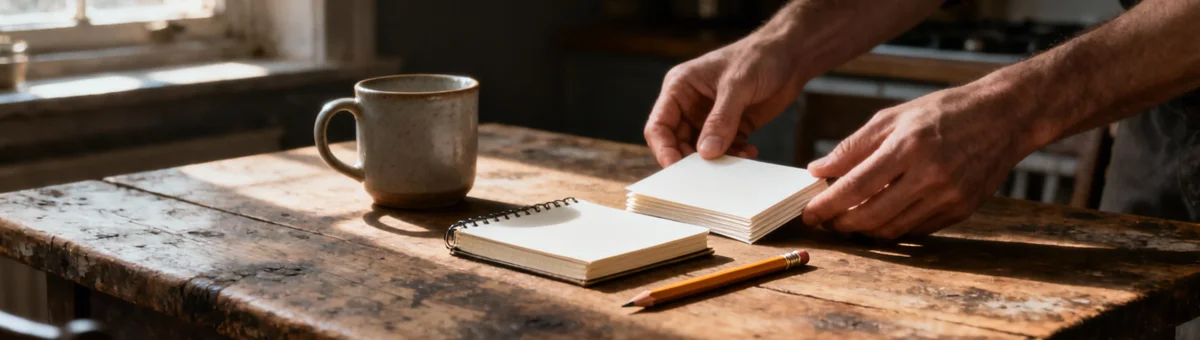
Small talk also becomes easier when you limit sensory load. If a room is loud, stand where you can see the door. If eye contact feels too intense, look at the person’s cheekbone or the space between their eyebrows. If you lose words under pressure, keep one hand around a glass, notebook, or pen. Not as a prop to look cool. As a physical anchor. The body likes a job.
And if you miss a cue, repair it plainly. “I think I talked over you. Go ahead.” “I may have misunderstood that.” “I need a second to think.” Those lines can feel embarrassing at first, but they are often less awkward than pretending you caught everything while your brain is two rooms behind.
People who are trying to build real emotional intelligence practice need this kind of repair more than they need polished charisma. Emotional skill shows up when you notice your own reaction before it grabs the steering wheel. In conversation, that might mean feeling your chest tighten and choosing one slower sentence instead of five frantic ones.
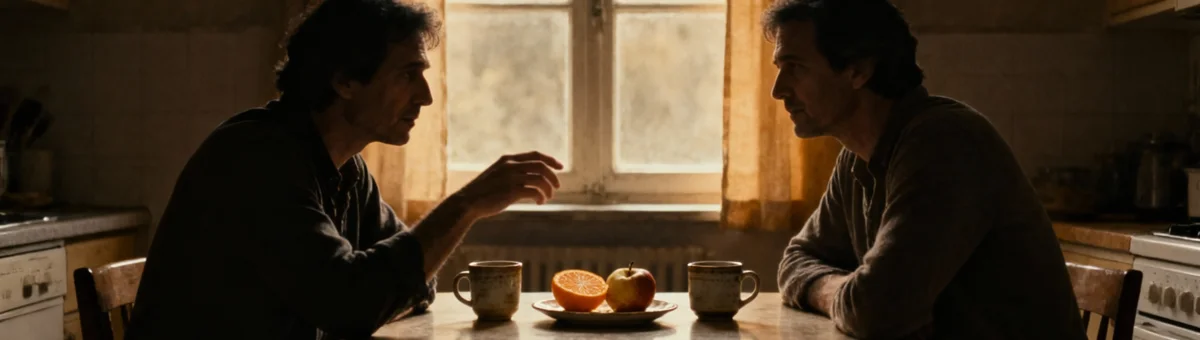
Small talk becomes meaningful when you stop rushing depth
Small talk can turn into a real relationship, but the turn usually happens through one honest follow-up, not a dramatic confession.
A lot of people want to skip casual talk because they crave something more real. I understand the impulse. Surface-level chatter can feel like chewing cardboard when you are lonely, stressed, or tired of pretending everything is fine.
Skipping the surface sounds brave until you watch someone’s shoulders rise because you asked a raw question too soon. Depth without consent can feel like pressure. I had to learn that one the uncomfortable way. I used to ask “big” questions early because I thought it made me a better conversationalist. Sometimes it did. Sometimes it made people look at their shoes.
Small talk gives people a chance to choose more. That choice is the respectful part.
The best transition is usually a small deepening, not a leap. If someone says work has been busy, don’t jump to “Are you fulfilled?” Try, “Is it the kind of busy that feels worth it, or just the kind that follows you home?” If someone mentions moving recently, don’t ask if they are lonely right away. Try, “Does the new place feel like yours yet?”
Those questions work because they leave space. The person can answer lightly: “Getting there.” Or they can open up: “Honestly, not really. I still feel like I’m living out of boxes.” Your job is to match the opening, not shove your foot through it.
There is a rhythm to this. Observation. Question. Answer. Small disclosure. Pause. You don’t need to follow that like sheet music, but you can feel when one person keeps taking and the other person keeps giving. A conversation becomes heavy when the exchange turns into a one-person download.
If you want to move from small talk to something more human, use one of these small turns:
- From fact to feeling: “You moved last month? Has it felt exciting or mostly annoying?”
- From role to reality: “You manage a team? What part of that drains you more than people think?”
- From event to preference: “Do you like conferences like this, or do you need two days alone afterward?”
- From routine to story: “How did you get into that in the first place?”
Use fewer clever questions than you think. One good follow-up beats six shiny ones. If the other person gives you something real, don’t immediately top it with your own story. Stay with their answer for one more breath.
That sounds small. It is small. It is also where most people drop the ball.
When someone says, “My dad’s been sick, so it’s been a weird month,” the next move is not your story about your uncle, unless the person asks or there is a clear reason to share it. Try, “I’m sorry. Has it been more logistics, or more emotional weight?” Then be quiet. Let the person decide how much room the topic gets.
Small talk also has a time limit. In a job interview, the warmup may last ninety seconds before both people want to get to the reason you are there. On a first date, small talk may stretch longer because both people are checking tone, humor, pace, and safety. In a tense family setting, small talk may be the whole point because deeper talk would light the curtains on fire.
So how long should small talk last before moving deeper? Long enough for both people to settle. Short enough that nobody feels trapped in the lobby.
I know that answer is not a stopwatch. Good. A stopwatch would make you weird in a new way.
The quiet test of social confidence
Social confidence often looks like staying kind when a conversation does not reward you quickly.
Some people will not warm up. Some will answer every question with a pebble. Some will talk only about themselves and never ask you one thing back. Small talk will show you this fast, which is useful information even when it is mildly irritating.
You do not have to win those moments. You can leave cleanly.
“Good talking with you. I’m going to grab some water.” “I’ll let you get back to your work.” “I’m going to say hi to a couple people before I head out.” These are not failures. These are exits with handles.
If you want more help with the rough edges, handling awkward conversations is a learnable skill too. The same rule applies: name what is happening, lower the heat, and stop trying to look flawless.
Small talk is not supposed to prove you are interesting. It is supposed to help two people share a small patch of time without making each other work too hard. Some days you will do it well. Some days you will say, “You too,” when the server tells you to enjoy your meal, and then you will stare into the distance like you have ruined the treaty between nations.
Try one rep this week. Ask one person a low-pressure question, follow the detail they give you, and end the exchange before you start performing. The room may still feel too warm. Your hand may still fuss with the edge of your sleeve. The conversation can still count.
Later, you might remember one sentence from it while standing at the sink, rinsing a spoon you didn’t use.
Frequently Asked Questions
Why does small talk feel so hard?
Small talk often feels hard because people try to perform or sound interesting. It gets easier when you focus on noticing real details, asking simple questions, and responding naturally.
How can I get better at small talk?
You can get better at small talk by practicing one low-pressure comment in everyday places like the store, coffee shop, or elevator. Simple observations such as “That line moved faster than I expected” can start a natural exchange.
What should I say during small talk?
During small talk, say something simple about what you both can see, hear, or experience in the moment. Comments about the weather, a long line, a product, or a shared situation are often enough.
How do I stop overthinking small talk?
You can stop overthinking small talk by lowering the goal from “be impressive” to “be present.” A short, genuine comment is usually better than trying to force a clever conversation.