
Last March, I was at a friend’s housewarming party in Portland, standing near the kitchen island with a guy named Derek. We’d been talking for maybe four minutes — sports, the neighborhood, normal stuff — when I made a joke about his shirt looking like something my dad would wear on a fishing trip. He bought it that morning. His wife picked it out. I watched his face tighten, and the air between us turned to concrete. That moment — standing there with a half-empty beer and a full stomach of regret — is exactly when you need to know how to recover an awkward conversation. Not prevent one. Recover one. Because prevention advice is everywhere, and it’s mostly useless once you’ve already said the dumb thing.
The truth is, most social skills advice assumes you haven’t screwed up yet. It tells you how to start conversations, how to listen, how to ask good questions. That’s great. But nobody talks about what happens after the awkward moment has already landed — after the weird pause, the accidental insult, the joke that didn’t land, the overshare that made someone’s eyes go wide. That’s where the real skill lives.
Why Most People Make Awkward Moments Worse
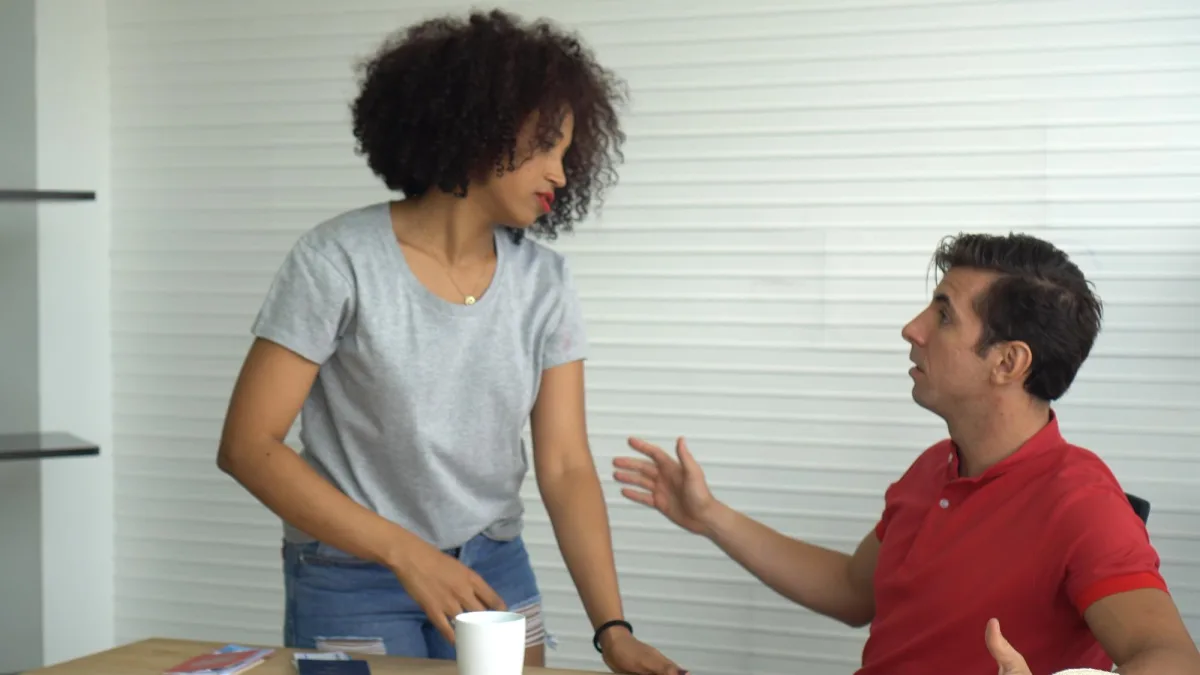
When a conversation goes sideways, your brain does something predictable and unhelpful: it panics. Psychologist Matthew Lieberman’s research at UCLA on social pain — published in Science in 2003 — found that social rejection lights up the same brain regions as physical pain (some part of your brain called the dorsal anterior cingulate cortex, if you want to sound smart at parties). Your brain literally treats an awkward moment like a small injury. And when you’re injured, your instinct is to flee or freeze.
That’s why most people respond to conversational awkwardness in one of two ways, and both make things worse.
The Overcorrect. You start talking faster, louder, piling on words to bury the awkward moment under sheer volume. I’ve done this. After the shirt comment with Derek, my first instinct was to say, “No, I mean, fishing shirts are cool, my dad’s actually really stylish, I mean not that you need to be stylish, you look great—” and by the third clause I could hear myself drowning. If you’ve ever noticed yourself talking faster when you’re nervous, you’re not imagining it — anxious speakers can hit 210-plus words per minute, well past the roughly 190 wpm that feels comfortable to a listener. You’re literally outrunning the other person’s ability to process what you’re saying.
The Freeze. You go silent. Stare at your drink. Hope the moment passes on its own. It doesn’t. A 2011 study by Namkje Koudenburg and colleagues at the University of Groningen found that conversational silences as short as four seconds significantly increased feelings of anxiety and social exclusion in both parties. Four seconds. Count that out. It’s nothing on a clock and an eternity in a conversation.
Neither response works because both are about making yourself feel better, not about the other person. The conversation doesn’t need you to disappear. It needs you to do something.
How to Actually Recover an Awkward Conversation
Okay, so you’ve said the wrong thing. Or the silence has stretched past comfortable. Or you’ve accidentally brought up someone’s ex, or their job they just lost, or their team that just got eliminated. The moment is here. What now?
I’m going to give you a sequence that works — not because it’s magic, but because it redirects attention from the awkwardness to something more interesting. I’ve used it dozens of times. It doesn’t always work perfectly, and I’ll be honest about that too.
Step 1: Name it, but don’t dramatize it
The single most effective thing you can do after an awkward moment is acknowledge it out loud — briefly, lightly, and then move on. Something like:
- “Well, that came out wrong. What I meant was—”
- “That was a weird thing to say. Ignore that.”
- “I think I just made this awkward. My bad.”
That’s it. One sentence. Don’t explain why you said what you said. Don’t apologize for thirty seconds. Don’t make a self-deprecating monologue out of it. The goal is to signal to the other person: I noticed, I’m not pretending it didn’t happen, and we can move past it.
I used to think ignoring awkward moments was the sophisticated move — just power through, pretend nothing happened. I was wrong about that for years. What actually happens when you ignore it is that the other person is left holding the discomfort alone. They’re thinking about it, you’re pretending it’s not there, and now there’s a gap between what’s happening and what’s being said. That gap is where conversations die.
Brené Brown’s shame research backs this up — she’s shown that just naming the uncomfortable thing out loud takes away a lot of its power. You don’t need to make a speech about it. Just say it happened.
Step 2: Redirect with a genuine question
After you’ve named the moment, you need somewhere to go. This is where a lot of people stall — they acknowledge the awkwardness but then stand there like they’re waiting for permission to continue. Don’t wait. Ask something.
Not a random question. Not “So, how about that weather?” That feels like you’re running away. Ask something connected to whatever you were talking about before things went sideways, or — even better — something about the other person that shows you were actually paying attention earlier.
With Derek, after I stopped my rambling overcorrection, I took a breath and said, “Okay, I’m clearly not qualified to talk about fashion. But you said you just moved here from Boise — what made you pick this neighborhood?” He’d mentioned Boise two minutes before the shirt disaster. Bringing it back told him I’d been listening, and it gave him something easy and pleasant to talk about. The tension dropped by about 80% within ten seconds.
If you want to get better at this kind of redirection, building a habit of daily social skills routines helps enormously — not because you’ll memorize scripts, but because you’ll develop a feel for conversational rhythm that makes recovery instinctive.
Step 3: Let the other person lead for a while
After an awkward moment, the best thing you can do is talk less. I know that feels counterintuitive — your instinct says fix it, say more, make it better. But the other person needs space to re-settle into the conversation. Give it to them.
Ask your redirect question, then actually listen to the answer. Not the performative nodding kind of listening — the kind where you’re genuinely curious about what they’ll say next. When they finish a thought, ask a follow-up based on what they said. Let them carry the conversation for two or three exchanges.
This does two things. First, it takes the spotlight off you, which reduces the residual awkwardness. Second, it signals that you’re more interested in them than in managing your own embarrassment. People notice that. They might not consciously register it, but they feel it.
One thing I’d add here: pay attention to what your body is doing during this part. Relax your shoulders, keep your hands visible, maintain easy eye contact. Your body is telling the other person whether you’ve actually moved past the awkward moment or whether you’re still stuck in it. I’ve had conversations where I said all the right recovery words but was standing there with my arms crossed and my jaw tight, and the other person could clearly tell I was still rattled. The words matter less than you think if your posture is screaming “I want to leave.”
The Awkward Moments That Aren’t Yours to Fix
Sometimes you’re not the one who created the awkwardness. Someone else said the weird thing, and now you’re both standing in the wreckage. This is actually harder, in some ways, because you have to decide: do I acknowledge what just happened, or do I give this person a graceful exit?
Usually, the graceful exit. If someone overshares, says something they clearly regret, or makes a joke that falls flat — and they know it — the kindest thing you can do is not make them address it. Just smoothly pick up a nearby conversational thread and keep going. Social psychologists call this “face-saving,” and there’s a good reason it works: research on social blunders consistently shows that people recover from other people’s awkward moments much faster than from their own. The embarrassment is almost entirely one-sided. So when you offer that bridge, you’re not doing as much heavy lifting as it feels like — you’re mostly just giving the other person permission to stop replaying the moment in their head.
I watched my friend Mara do this beautifully at a dinner last year. A guy at the table — someone’s coworker, I think — made a comment about his divorce that landed way heavier than he intended. You could see him realize mid-sentence that he’d gone too far. The table went quiet. Mara, without missing more than a beat, turned to him and said, “That reminds me — did you say earlier you’ve been getting into woodworking? My brother just started that and he’s terrible at it.” Everyone laughed. The guy looked relieved enough to cry.
She didn’t acknowledge the awkward moment. She didn’t say “that must be hard” or try to address the divorce. She just built a bridge to somewhere easier, and let him walk across it. That’s a different skill than recovering your own mistakes — it’s recovering someone else’s, and it requires you to be paying close enough attention to know what conversational thread to grab.
Building that kind of awareness is really about emotional intelligence in conversation — reading the room, sensing what someone needs, and responding to that instead of to your own discomfort.
A Note on Professional Settings
Everything above applies at work too, but the calibration is different. In a meeting or with a boss, the “name it” step needs to be shorter and more matter-of-fact. You don’t get the same latitude for self-deprecating humor that you do at a party. Something like “Let me rephrase that” or “That’s not what I meant — here’s what I’m trying to say” works better than “Wow, that was dumb of me.” In professional contexts, people are watching to see if you can course-correct without making a scene. The recovery itself is the competence signal. I’ve seen people actually gain credibility in meetings by handling a misstep cleanly — it shows you can think on your feet, which matters more in most workplaces than never making a mistake in the first place.
What I Got Wrong About Awkwardness for a Long Time
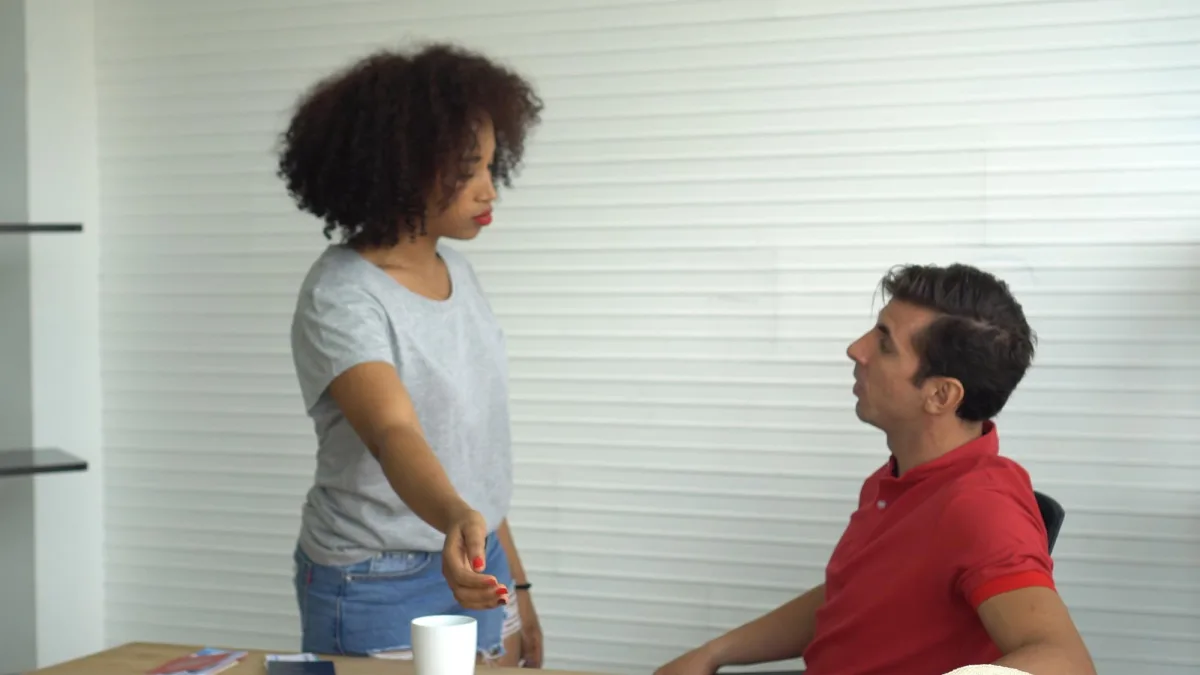
For most of my twenties, I believed that socially skilled people didn’t have awkward moments. That confidence meant smoothness — an unbroken flow of charm and wit. I’d watch people at parties who seemed to glide through every interaction and think, they never say the wrong thing.
That was completely wrong. What I eventually noticed — and it took me embarrassingly long — is that those people had awkward moments constantly. They just recovered faster. The gap between the awkward moment and the recovery was so short that you barely registered it. It looked like smoothness, but it was actually speed of repair.
Albert Bandura’s self-efficacy theory (1977) actually explains this well. Confidence isn’t the absence of failure — it’s the belief that you can handle failure when it comes. Socially confident people don’t avoid awkwardness. They trust themselves to get through it. That trust comes from repetition — not from reading about it, but from having actually been in enough bad moments that the panic response gets shorter each time. If you want to dig deeper into how that kind of confidence works as a buildable skill, I’ve written about it separately.
The shift for me happened at a networking event in Chicago — maybe 2026. I said something stupid to a woman who turned out to be the CEO of the company I was trying to connect with. I called the company by the wrong name. Not even close — I confused it with a competitor. She corrected me, and I felt my face go hot.
But instead of spiraling, I laughed and said, “Wow, that’s a terrible start. Can I get a do-over?” She laughed too. We talked for twenty minutes after that. She remembered me months later — not for the mistake, but for how I handled it. That was the first time I understood that recovery is more memorable than perfection.
Three Things to Practice This Week
I don’t want to leave you with philosophy. I want to leave you with something you can actually do.
1. The two-second rule. Next time a conversation gets awkward — and it will, probably within the next 48 hours — give yourself exactly two seconds of silence. Not four (that’s where the Koudenburg research says anxiety spikes). Two. Use those two seconds to take one breath and pick your next move: name it, redirect, or build a bridge for the other person.
2. Pre-load three redirect questions. Before your next social event, think of three genuine questions you’d actually want answered. Not “how’s work?” — something specific. “What’s the best meal you’ve had this month?” or “Have you watched anything recently that surprised you?” Having these ready means you’ll never be stuck after an awkward moment with nowhere to go.
3. Practice on low-stakes interactions. Talk to the barista. The person in the elevator. The cashier. Say something slightly weird on purpose — not offensive, just a little unexpected — and practice recovering. “Nice weather, huh? Actually, I hate small talk about weather. What’s something interesting that happened to you today?” You’ll feel awkward doing this. That’s the point. You’re building the — okay, I almost said “recovery muscle” again. You’re getting reps. Low-stakes reps where nobody remembers your name and the worst outcome is a slightly confused barista.
Frequently Asked Questions
What if the other person is clearly upset, not just mildly uncomfortable?
If you’ve genuinely offended someone, a quick “my bad” won’t cut it. Stop, make eye contact, and say something direct: “I’m sorry. That was thoughtless.” Then give them space to respond or not. Don’t rush past it — that signals you care more about your comfort than their feelings.
Does this work over text too, or just in person?
Mostly, yes. The “name it and redirect” approach translates well to text. Something like “lol that came out weird — anyway, what I was trying to say was…” works. The main difference is you have more time to think over text, so use it. Don’t fire off three panicked follow-up messages.
What if I freeze and can’t think of anything to say?
Freezing is normal — your brain is processing social threat. If it happens, buy time with something honest: “Sorry, lost my train of thought for a second.” Nobody judges that as harshly as you think they do. Then fall back on one of your pre-loaded redirect questions.
Can you recover a conversation that went awkward days ago?
Sometimes. If you see the person again, a brief, light reference can work: “Hey, I think I was weird last time we talked — sorry about that.” Most people appreciate the honesty and won’t dwell on it. The longer you wait, the less it matters to them — it usually matters more to you than to them in the first place.
Is it ever better to just walk away?
Absolutely. If the conversation has gone somewhere genuinely uncomfortable for either of you, a clean exit is a valid move. “I’ve got to run, but it was good talking to you” is always available. Not every conversation needs to be saved.
Derek and I actually talked for another twenty minutes that night. He told me about fly fishing in Idaho — turns out he’d just gotten back from a trip on the South Fork of the Snake River. I told him his shirt would’ve been perfect for it. He laughed that time. Sometimes the second attempt at the same joke is the one that lands, but only if you earned the right to try again.
Last updated: January 2025